| New
links are welcome. Scroll to the end for other link pages. |
||||
| click on images for links | Films and projects | |||
| Early
films The British Film Institute now have an excellent site
covering Russell's television work. This is highly recommended. Click here
www.screenonline.org.uk/tv/id/1030022/. |
||||
 |
Altered
States (scroll down the page) "Exactly how you respond to
this visually relentless jackhammer of a film will depend
on your tolerance for Russell's orgiastic camera
pyrotechnics, which actually manage to surpass here what
achieved a few years earlier in Tommy. Fortunately,
Russell also keeps a firm grip on the narrative and
characterizations (a skill with which has been credited
far too rarely), keeping this from descending into a
mindless sci-fi freakshow." |
|||
 |
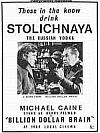
Billion
Dollar Brain
|
|||
 |
The
Boyfriend Basic information about the film and songs. And some reviews: "Ken Russell turned
the Sandy Wilson show (first produced in London in 1953)
into an anti-musical and destroyed most of the pleasure
the audience might have had. Russell's greatest
deficiency is that he doesn't understand the charm of
simplicity. The glittering, joyless numbers keep coming
at you; you never get any relief from his supposed
virtuosity." |
|||
 |
Crimes of
Passion Kathleen Turner: "Crimes Of Passion
pushed her, she says, "to my limit". After
completion, she was so exhausted that she slept for 22
hours. It is a clever film, a kind of maze, that leads
you in all sorts of wrong directions, teases you, before
finally succumbing - no, wrong word - celebrating what
some may think is the biggest cliché in the book,
love." |
|||
 |
Dance of
the Seven Veils (link no longer available for
free) A reprint of an article from 1970 on The Dance of the Seven Veils "Of his comic strip
technique, which most critics did not like either, Mr
Russell said: “My intention was to paint in broad
strokes. I wanted strong, hard outlines to bring out
aspects of this man and his work that to my mind have
been overlooked. Strauss was a self advertising, vulgar,
commercial man. I took the keynote of the film from the
music, a lot of which is bombastic. When you need a
120-piece orchestra to show a child being bathed, your
ego has become pretty inflated”. " |
|||
|
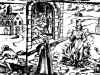
The Devils,
Grandier, Loudon (links are down) Questions on The Devils "What are your overall impressions of the film? Russell hasn’t attempted to give us a historically accurate account, even though it is based on true events. His deliberately stylized approach, coupled with the “modern” aspects of the film (set design, music, certain dialogue) indicate that he is, perhaps, equally interested in using this historical event to shed light on dilemmas of the 70s. What do you think Russell wants to say about contemporary society?" |
|||
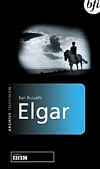 |
Elgar A review of the DVD "It was filmed in 1962 at a time when Elgar's music – and, it has to be said, British music in general, was in the doldrums. Personally speaking, I well remember being heartily criticised for daring to include Elgar's Symphony No. 2 in a programme I presented to the Peterborough Recorded Music Society in Elgar's centenary year of 1957 – "why choose music from that old has-been – it’s nothing but vulgar tub-thumping jingoistic nonsense", I was reprimanded. A typical opinion in those days! Indeed, several weeks later when I went to a performance of Elgar's The Kingdom at London’s Albert Hall, there seemed to be more people in the choir and the orchestra than in the audience! But this wonderful (yet flawed) film changed all
that. From the time it was broadcast, new recordings, and new books,
shedding more and more light on the composer’s life and works appeared
in increasing numbers." |
|||
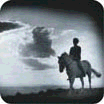 |
Elgar A review of the DVD "Ken Russell’s direction is stunning, with scenes
of simple rural life imparting particular outdoor splendour,
complimenting the composer’s work. Particularly memorable are the pony
rides and cycling scenes, shot on location in the Malvern Hills, where
Elgar chose to take constitutional walks, saying “I do all my composing
in the open. At home, all I have to do is write it down”. Best of all is
the scene of the lunatic asylum band playing Elgar's work. Complete with
drooling mouths and rolling eyes, they hammer out one of his early
pieces." |
|||
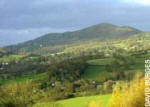 |
Elgar tour The hotel has a video library,
and that evening I watch the dramatised biography of Elgar by Ken Russell.
Though the film is more than 40 years old, it has worn well. Elgar's music
accompanies black-and-white vignettes, with the Malvern hills as a recurring
backdrop. At the end, cine film shows Elgar shortly before his death in
1934, emerging from Worcester cathedral and playing with his dogs in his
garden. |
|||
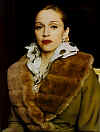 |
Evita
(link is down) About Ken's initial involvement in Evita. "The 1981 version
was slated to have Robert Stigwood co-produce and Ken
Russell to direct. But before it could lift off the
ground, Ken Russell was dismissed from the project". |
|||
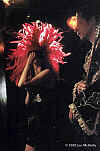 |
The
Fall of the Louse of Usher Joe McNally's photos on location with Ken Russell and The Fall of the Louse of Usher. |
|||
|
|
Gothic and
Natasha Richardson On Richardson, with a short mention of Gothic: "Best Line: As
Shelley and the other guests plan a scientific experiment
after imbibing laudanum, Mary tells Dr Polidori (Timothy
Spall), "Oh, it's easy to understand them, doctor -
they have it in mind to raise the dead." This, of
course, is the supposed inspiration for her to write
Frankenstein. " |
|||
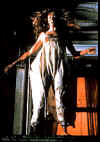 |
Gothic (scroll
down the page) "Almost impossible to appreciate on its first viewing, Gothic is definitely not one of Russell's major films but does offer its own modest giddy pleasures." |
|||
 |
I Camcorder "The programme looks at that
camcorder favourite, the family wedding. With expert
direction from Ken Russell, it would seem that nothing
could go wrong, but the bride's uncle still manages to
capture a number of embarrassing situations - from the
bride's mother wrenching out her newly coiffed hairstyle,
to the bride gulping down whisky to steady her
nerves" |
|||
|
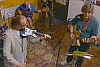
In
Search of the English Folk Song (the section
on the film seems to have gone). Some photos of Fairport Convention from the film. |
|||
 |
Kiplinger
(link is down). Ken's initial involvement in Kiplinger's Syndrome . Ref 81. "have written 5
screenplays... and started producing upon advice of
British director, Ken Russell, who called my script
Kiplinger's
Syndrome brilliant. He was to
direct it, but chose Ilkka based on advice from Hollywood
insiders, (Tim Warner, ShoWest; Trimark; Robert Altman,
etc)". |
|||
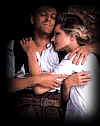 |
Lady
Chatterley "Like The Rainbow, this adaptation finds the outrageous filmmaker more subdued than usual, with delicate pastoral photography and some great period costumes providing all of the visual flair." |
|||
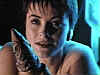 |
Lair A site about The Lair of the White Worm with detailed analysis. Recommended "By the time Stoker
wrote Lair, he had descended into churning out formulaic
fiction (and, depending on which account you read, was on
the brink of madness due either to syphilis or Bight's
Disease) so while Lair contains some interesting
references, it could not be described as a classic work
of fiction." |
|||
 |
Lair (scroll down
the page) "Perhaps
an acquired taste, Lair of the White
Worm is in many ways the ultimate
Ken Russell film. All of his filmmaking strengths really
hit their stride here: a twisty, insane narrative;
outlandish sexual imagery and hallucinatory visuals; and
pithy, literate banter focusing on class conflicts." |
|||
 |
Lair
and Salome The making of the commentary for the DVDs of Lair and Salome. "It was in the New
Forest that I would ultimately catch up with Ken,
although finding him was not easy. For starters, we
didn’t know he’d returned to the south of
England, and so we set out expecting a trip to the Lakes
District in the north. Once we located him, we discovered
that the town he lived in was not on any map, and in fact
didn’t even have a post office, as his postal code
was that of Brockenhurst, the closest town of any
significant size." |
|||
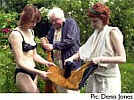 |
Lion's
Mouth (Leomania) (page no longer available for
free). "The lion, which had been waltzing around the lake (as lions do in Ken Russell films) is on loan from the BBC costume department. Inside it are three of Russell's best swansdown pillows, some very soggy newspapers and a young woman called Marie. She stands in her underwear, her (lion's) head in her hands, as the drying out operation is carried out by the entire cast and crew for this scene; that is to say Russell, me, Evening Standard photographer Denis Jones and Marie's co-star, Emma. Emma wears a toga she
has obviously made from a sheet. Clearly no expense has
been incurred on Leomania." |
|||
 |
|
|||
|
|
Louse The Peter Pan of Shock: an interview on Louse. "We are sitting at
the top of exhausting stairs in a tiny Soho studio
watching a blow-up sex doll and a blow-up Godzilla having
simulated sex, filmed on a camcorder, while Britain's
one-time most famous director attempts to dub in orgasm
noises lifted from a porn movie". |
|||
|
|
Louse Ken in Cannes with Louse: One British director
with no illusions that he will win anything is Ken
Russell who is premiering his latest film tomorrow. Shot
largely in his back garden, The Fall of Louse of Usher is
a sex comedy loosely based on Edgar Allan Poe's The Fall
of the House of Usher. Russell, who at his peak 35 years
ago, was responsible for such classics as Tommy and Women
in Love, joked that his new work would go down in the
"anus of film history". |
|||
|
|
Louse
(page no longer available for free). A tiny snippet on Louse. "The creator of
such gaudy gems as Lair of the White
Worm has also spent £20,000 of his
own money on the eight-part satirical adaptation of Edgar
Allen Poe’s The Fall of the House of Usher". |
|||
 |
Mahler
(scroll down the page) "Arguably the high point of
controversial British director Ken Russell's forays into
musical biographies (which include Clouds of Glory and
the outrageous Lisztomania), the 1974 biopic Mahler
remains lesser known most likely due to the absence of
any big stars." |
|||
 |
Mindbender An review of Mindbender (in Dutch). "Met hun oeuvre in
het achterhoofd rijst het vermoeden dat deze regisseurs
het expres verpesten" (remembering his oeuvre I
suspect that he deliberately sabotaged the film). |
|||
 |
The Miners'
Picnic Ken revisits the sites and people from his 1960s documentary. You can watch part of the film on-line.
|
|||
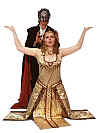 |
Phantom
(site has changed and I can't find the Phantom section now). Costumes based on Ken's Phantom of the Opera video. |
|||
|
|
Pop Goes
the Easel Minor trivia on Pop Goes the Easel. "Ken Russell used
the studio for the final party section in his film about
the British pop artists, Pop Goes
the Easel". |
|||
 |
Salome's
Last Dance (scroll down the page) "The results divided viewers
sharply down the middle, with the literate and often
claustrophobic approach faring better on the small screen
than in the theater." |
|||
 |
Song of
Summer A good analysis of Song of Summer. The gulf between the man
and the art is one that has always intrigued Russell; he
was to tackle it again in his film on Richard Strauss,
but there his personal aversion to the composer toppled
the portrait into caricature. His achievement in Song
of Summer is to make us see the
pathos in this callous old man, and to feel the urgent
hunger for life trapped in his crippled frame that at
last finds vicarious outlet in the music Fenby sets down.
It is also a touching story of selflessness on the part
of the 22 year-old Fenby. Russell, himself a lapsed
Catholic, described Song of Summer as
'the most Catholic film I have ever done. Fenby was a
newly converted Catholic when he volunteered to help
Delius, and he sacrificed himself, his life and his
future for an ideal and a talent he thought greater than
his own.' |
|||
 |
Song of
Summer You can listen to the music from the programme here. It includes a link to an
interview with Fenby including: Recommended |
|||
| Song of Summer | Song of
Summer Fenby on Delius and Song of Summer: "I have often been asked whether or not the sprinkling of rose petals over his body was a touch of Ken Russell's fantasy. No, that actually happened at daybreak that morning. Strange, perhaps, to English ways, but it was Jelka's wish, and she did it herself from a wheel-chair. " and "I little thought
when I was struggling to take down Delius' music at Grez,
that one day I should see the scene enacted in my own
home. Ken Russell's film was disturbingly life like. I
had net seen it before its public showing being myself
out of action during the weeks of shooting. Even so.
Christopher Gable, playing me, had asked me to spare his
feelings and keep away front the set. Eventually I was
rolled to the studios to record the music of the scene
where Delius, propped up in bed, listens to Percy
Grainger and me playing Grainger's two-piano arrangement
of The Song of the High Hills in the music-room. On my
arrival I found Russell immersed in directing a 'retake'
Of my first meeting with Delius which. apparently, had
not satisfied Max Adrian. I was ushered into the studio
to wait, and was just in time to hear that deliberate and
unforgettable greeting 'Come in, Fenby!' I had mimicked
Delius weeks before at Russell's suggestion as a guide to
Adrian to learning his line, and behaving like Delius,
but this was too much for me - the voice, the inflection.
the image of Delius sitting there, a rug over his knees,
with a great screen about him, slowly extending his hand
in welcome. I lived that momentous moment again, I am
unashamed to say, and not without a tear. Max Adrian told
me later that of all the roles he had ever played he had
never before had such difficulty in ridding himself of
involvement". |
|||
 |
Song of Summer (link has gone) "Watching
Song Of Summer
is a timely reminder, if one were needed, of the dumbing
down of TV drama over the last ten years. With its
literate script and challenging subject its highly
unlikely that we will see this type of programming
again". |
|||
 |
Tommy An excellent site on Tommy. It includes the full transcript of the film, as well as lots of good photos via the hyperlinks. "She brings
eyesight to the blind. Recommended |
|||
 |
Tommy
(scroll down the page) "visual feast with a host of familiar names delivering one song after another without any dialogue to impede the flow of music." |
|||
|
|
Weill and
Lenya Ken directing Judith Paris´ stage play Weill and Lenya. "It's difficult to get Russell to answer a straight question. He starts talking and you think he's answering, until you realise that he's swerved off on a tangent of his own and possibly doesn't even remember what he has been asked". "[Ken] fell in love
with the ultra avant-garde Danish film Festen". |
|||
| Reviews | Reviews Reviews of Altered States, Billion Dollar Brain, Crimes of Passion (soon), The Devils and The Lair of the White Worm. "[The Devils] There
is a beautifully literate script - the dialogue
positively sings at times. The surprise is that it is
from the pen of Russell himself, although one suspects
based on the relative hamfistedness of many other
Russell-penned scripts, that this more due to Russell
preserving the essence of Whiting's play intact than any
original writing of his own." |
|||
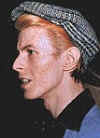 |
Bowie A short piece by David Bowie remembering Ken Russell from the Tommy/ Mahler period. "... I'm pleased to
report that [Tommy]
was quite fabulous! Ken Russell has always been one of my
favourite directors - I love all the special effects he
uses in his films. I met him while Dana was working in
one of his films [Mahler]
and we talked about his film technique and such. " |
|||