|
More commissions by Melvyn Bragg, mainly on composers, and including some of his best later work. "Every composer who Russell
immortalised in celluloid has reason to be grateful to him, from Wagner to
Martinu, Liszt to Tchaikovsky, Bruckner to Bax"
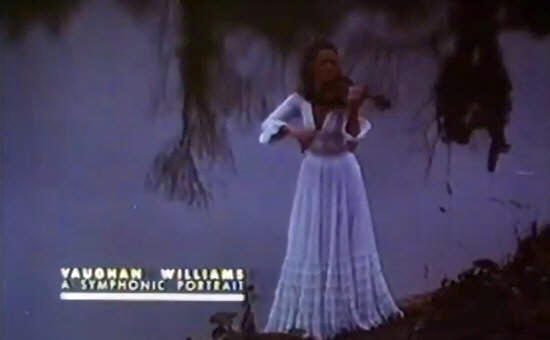
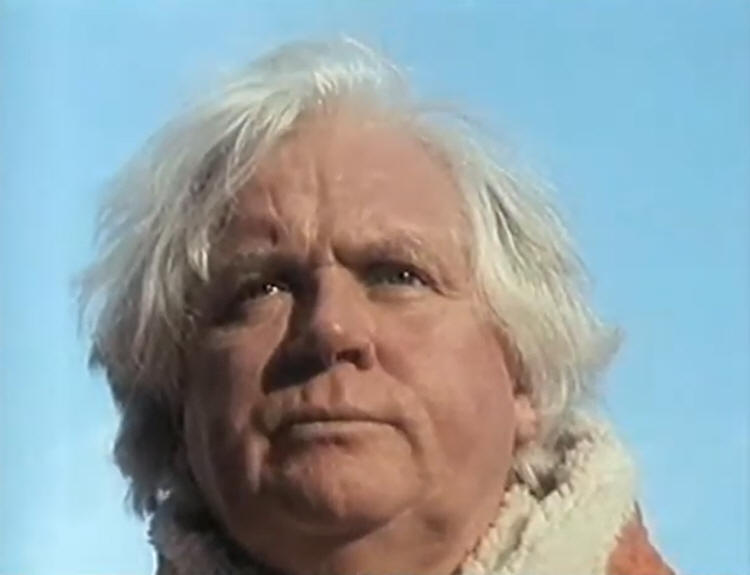
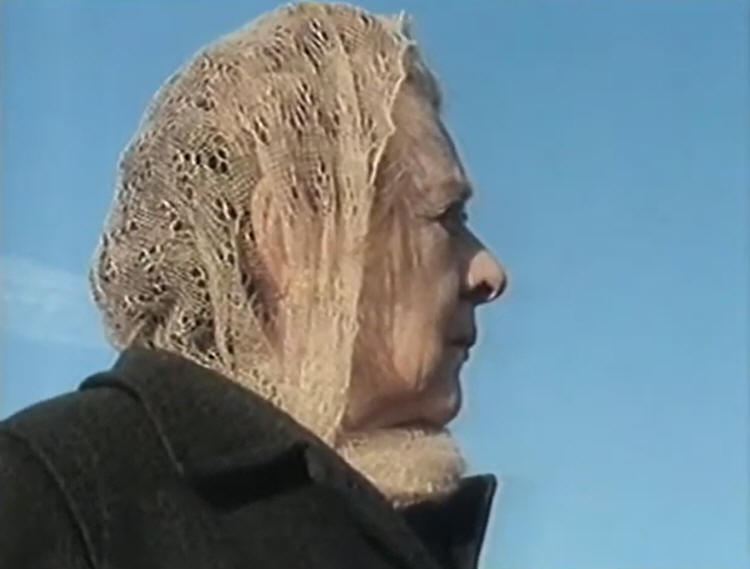
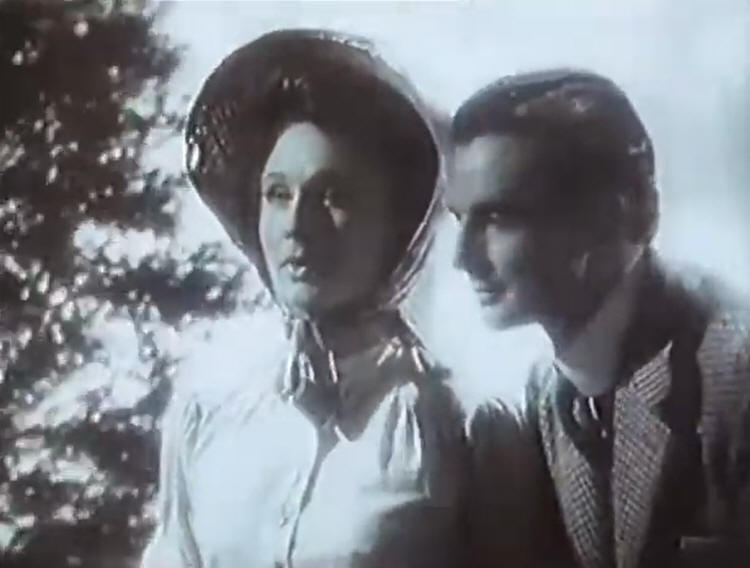
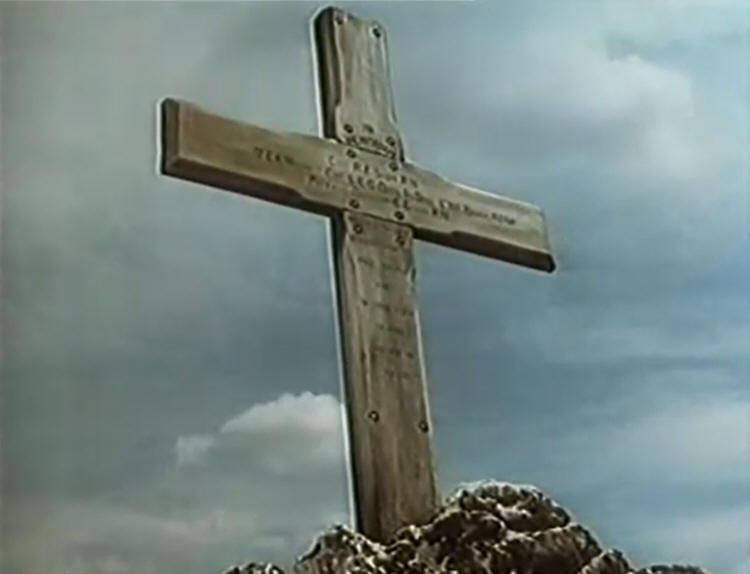
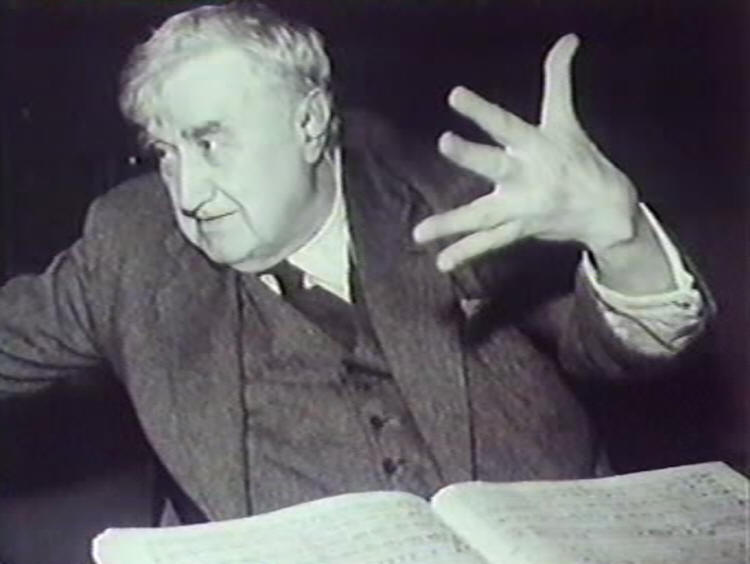
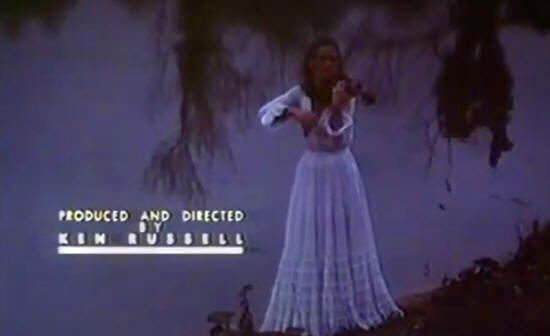
Vaughan Williams, A Symphonic Portrait- Ken Russell 's leisurely filming of the life of composer Vaughan Williams from 1984. "In a long and productive life, music flowed from
his creative pen in profusion. Hardly a musical genre was untouched or
failed to be enriched by his work, which included nine symphonies,
concertos for piano, violin, oboe and tuba, five operas, chamber, ballet
and film music, a large body of songs and song cycles, and various
important unaccompanied and orchestral choral works. His orchestral works
include such popular favourites as The Lark Ascending, Fantasia on a Theme
by Thomas Tallis, Five Variants of Dives and Lazarus, The Wasps Overture
and the English Folk Song Suite" (The Ralph Vaughan Williams Society,
click
here).
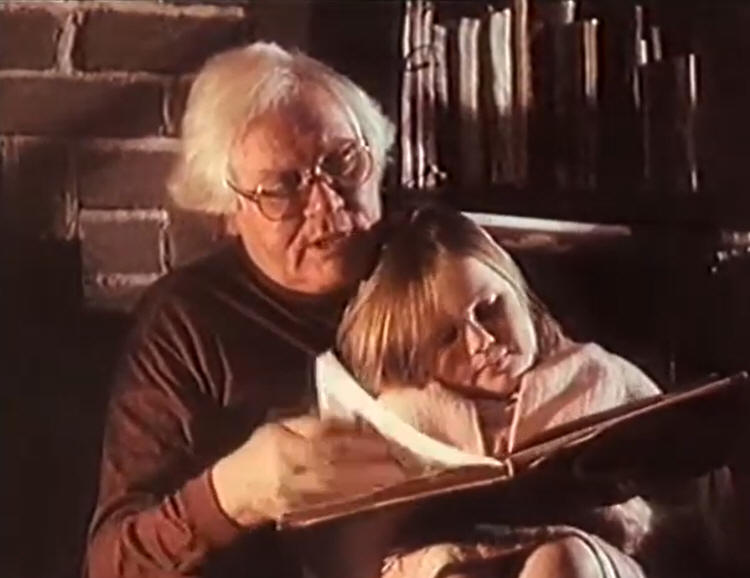
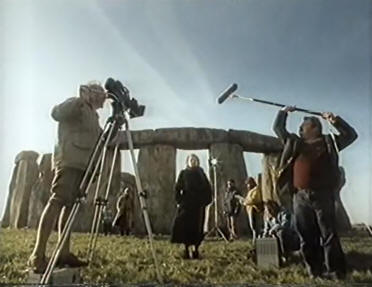
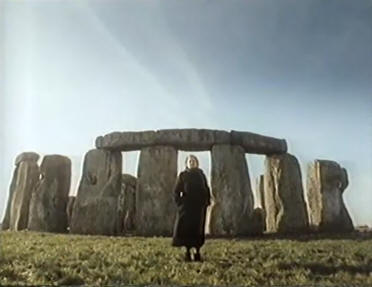
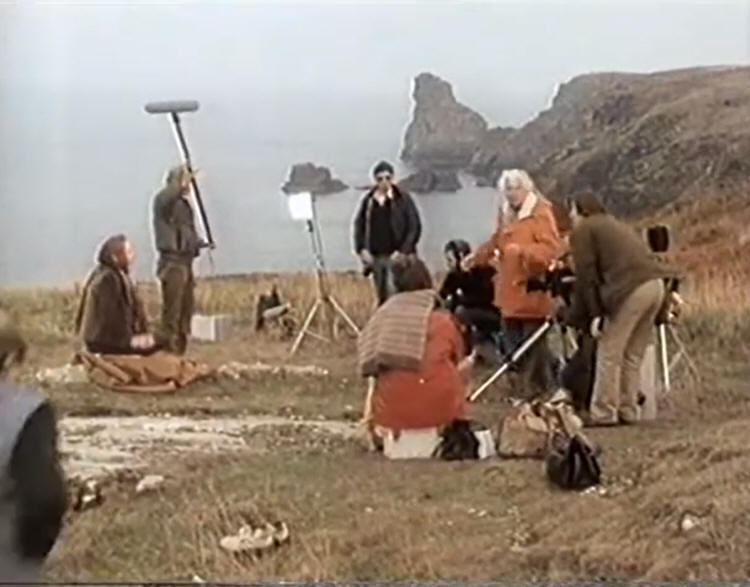
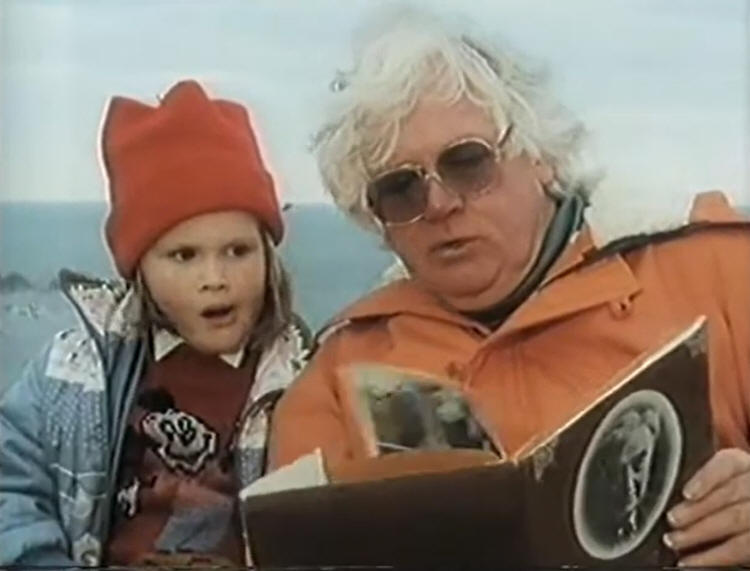
Russell tells his daughter of Vaughan Williams, and the films proceeds as documentary, reconstruction and film of the filming, with some recollections of The Debussy Film, though this has nowhere near the insight of the earlier film.
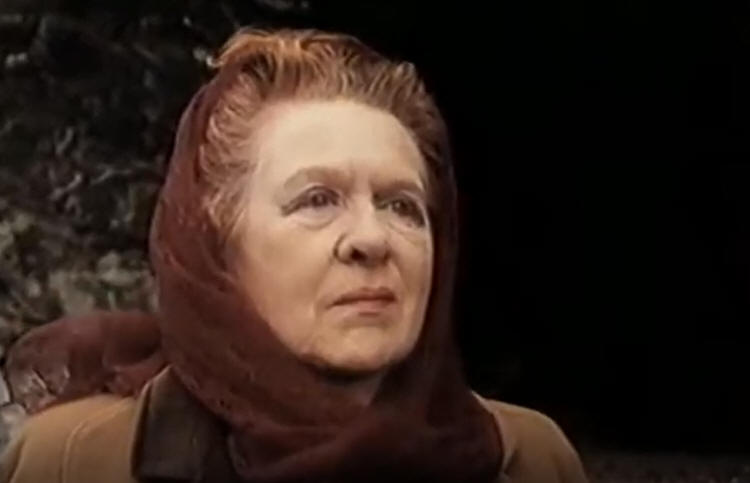
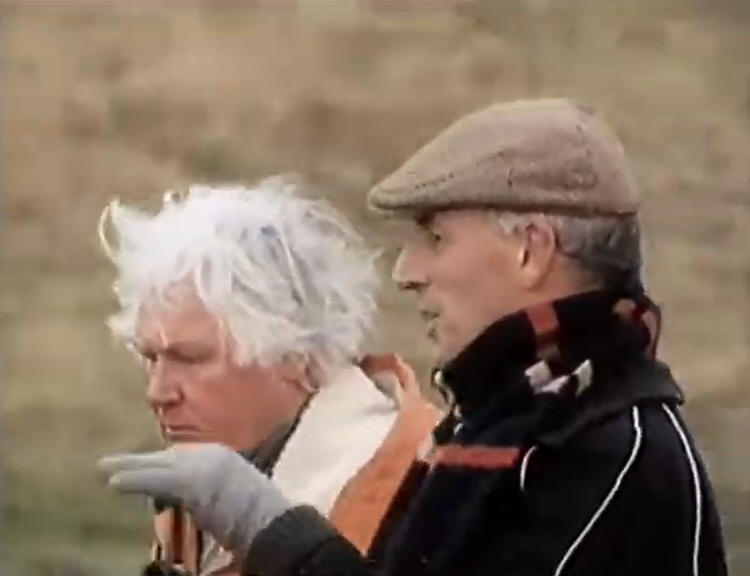
Vaughan Williams' wife Ursula appears in the film with Ken Russell.
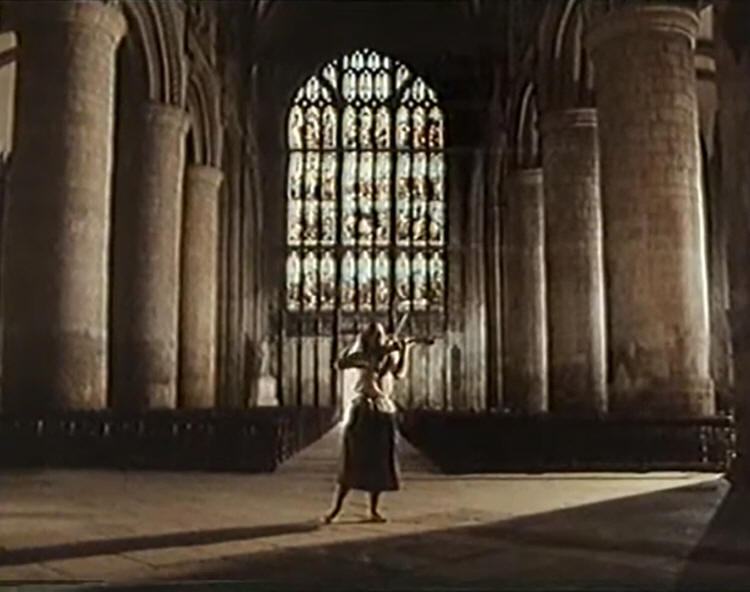
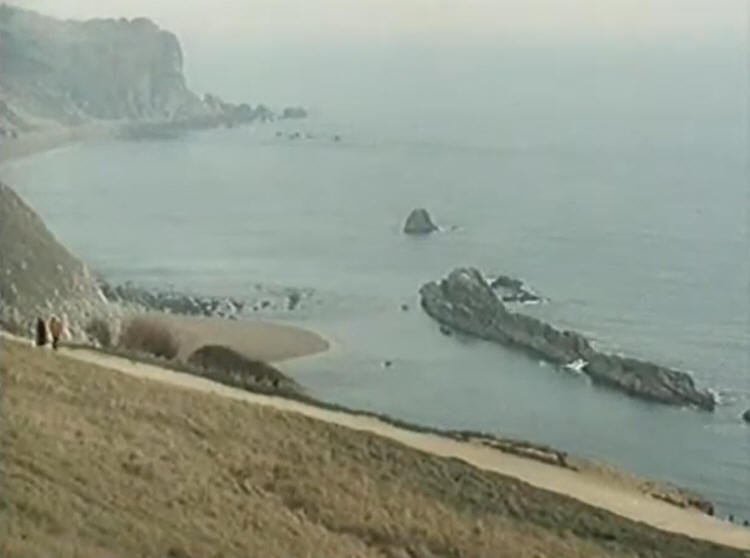
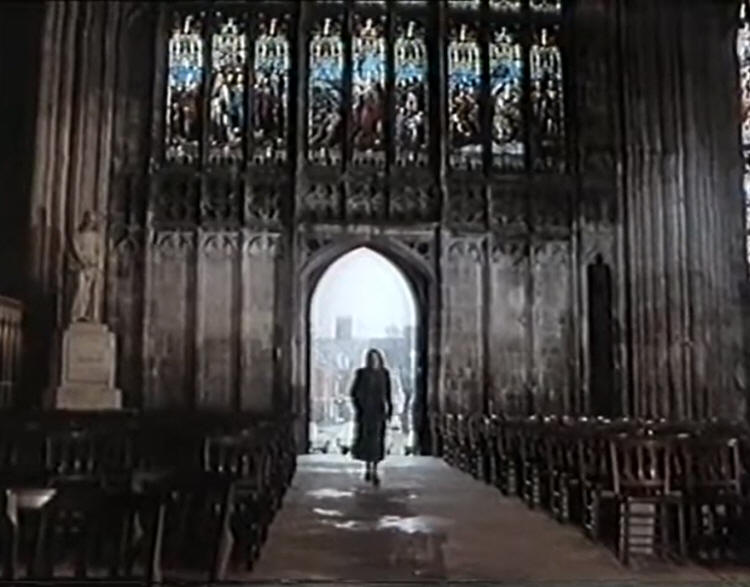
"Although Vaughan Williams … is a relatively straightforward and fact-filled biography, Mr. Russell is still not about to settle for being commonplace. The film opens with the director holding a young girl in his lap while flipping through the pages of a pictorial biography…. With the girl serving as stand-in for the average television viewer, Mr. Russell jumps from photo to photo … It is all terribly unorthodox, at moments even somewhat bizarre, but the viewer will come away knowing a good deal about Vaughan Williams.… The film is crammed with lovely touches. Choirboys, complete with red cassocks and white surplices, in procession at Gloucester Cathedral; Iona Brown performing a violin solo of ''The Lark Ascending,'' and Peter Savidge singing ''Menelaus'' on a cliff overlooking the sea. Near the end, the little girl begins yawning and Mr. Russell concedes that, yes, time is passing ... Mr. Russell looks pleased with his efforts, as well he might.” (John J. O'Connor, 28 Nov 1986, New York Times).
The script is by Ken Russell and Ursula Vaughan Williams, the composer's wife. Camera by Mike Humphreys and Les Young. Xavier Russell is the film editor. Russell produced and directed and Melvyn Bragg edited and presented. The music by Ralph Vaughan Williams includes:
All images from the film.
The Strange Affliction of Anton Bruckner from 1990. Ken Russell calls Anton Bruckner a simple man with complex music- his symphonies needed so many players they were rarely performed. "The oddity of his outward appearance was immediately noticeable, as was his unusual simplicity, modesty and truthfulness. Through further contact with him, one became aware of the high artistic goals the simple mam strove to attain" (Alexander Frankel quoted in Stephen Johnson, Bruckner Remembered, 1998, chapter II) and "his proverbial naivity should not be confused with a lack of intelligence" (Derek Watson, Bruckner, 1975, chapter 7). Bruckners work goes in an out of fashion "His symphonies have a curious hue – they’re both radical and traditional; and impossible to place in the context of what was happening elsewhere in music at the time... By the time his Eighth was premiered in 1892, Bruckner was being spoken about as the future of music...by the 1960s, it began to be spoken about as capturing the anxieties of the age, much like Mahler’s music did. Since then, it’s slipped in and out of fashion... [Conductor] Simon Rattle said: 'He was an otherworldly person, even to the standards of composers… He seemed to have been a strange and eccentric person.' He adds that he was a composer with 'an extraordinary vision and spirituality' and that his best-known symphony, the Seventh, is 'absolutely one of the glories of the whole repertoire'" (Phil Hebblethwaite, New Statesman, 30 Sept 2024, click here).
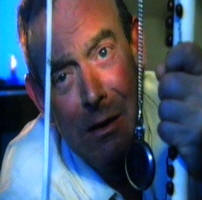
A good Russell film for three actors. Bruckner arrives at a rest home to be greeted by Hansel and Gretel, the two nurses.
The scene is reminiscent of the daunting arrival of Rebecca to the house in Hitchcock's film. Bruckner is obsessed by numbers throughout the film (the strange affliction of the title) counting the spokes on the carriage and the number of spoonfuls of food he is fed- "He was obsessed with the need to discover the numbers, characteristics and substance of inanimate objects" (Derek Watson, chapter 7).
He is also deeply religious- "music is a true reflection of the almighty".
Bruckner suffered a breakdown in 1866 and was sent to Bad Kreuzen for the cold-water cure. In the film Bruckner seems to be in a hospital but when he asks for a doctor he is always told the doctor will come later. Some Russell themes come back, in particular Bruckner being forced into the cold bath by the two nurses refers back to the treatment for cholera in The Music Lovers.
The nurse feeding Bruckner has parallels with Delius. A dream sequence to the music of Wagner, with fire, comes from Mahler and the cows from Women in Love.
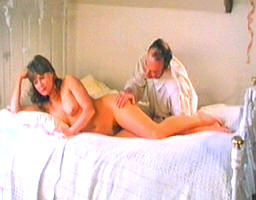
And there is another sexual-chaste relationship (Savage Messiah, Clouds of Glory etc) as the nurse lies naked on Buckner's bed and he caresses her body, seeing only the glory of god in her body.
Subtle scenes include Hansel and Gretel following Bruckner, always together and always a short distance away, as Bruckner sits in the sand as the sand falls from his fingers like time slipping away. And in a confessional as a penance for his (chaste) sins Bruckner is told by the priest to play Bach. The organ playing scene edits from the fingers playing, to Bruckner and then back to the fingers, make it obvious the actor is not really playing the organ. This compares with the authenticity of filming Richard Chamberlain actually playing the piano in The Music Lovers. At the conclusion when Bruckner is discharged and drives away, clearly unchanged, it turns out the nurse is actually the doctor and the disguise was part of the therapy, but she decided to stop treatment since if Bruckner had been cured he "may never have written a note of music...he is a happy celibate". "Ken Russell's television film The Strange Affliction of Anton Bruckner (1990) portrayed the composer as a kind of visionary idiot: a man through whom music flowed directly from the divine source, with virtually no intellectual mediation. That may be an extreme view, but it is based on a long-established tradition, one that began in Bruckner's own lifetime" (David Watson, ibid, Introduction). However Richard Capell wrote "Bruckner arrived at his musical forms by instinct, if not by design" (Quoted by Stephen Johnson in BBC Music magazine, September 2024).
Television actor Peter Mackriel plays Bruckner with Carsten Norgaard and Catherine Nielson playing Hansel and Gretel. Both would also appear in Prisoners of Honor. The editor is Brian Tagg, director of photography is Robin Vidgeon with some camerawork by Ken under the name Alf Russell, Victoria Russell is responsible for costumes (as her mother did previously for Ken Russell) and the script is by Ken. It was filmed in Hampshire and Kent, and the initial sequences in The Rhinefield Hotel.
Ken Russell and Melvyn Bragg introduce the film. The music included
All images from the film. Apologies for the poorer quality of some of the images.
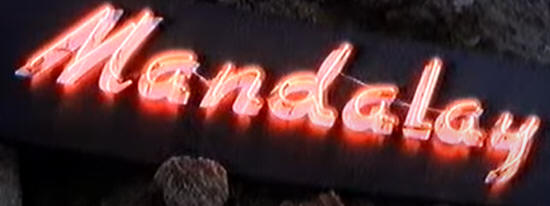
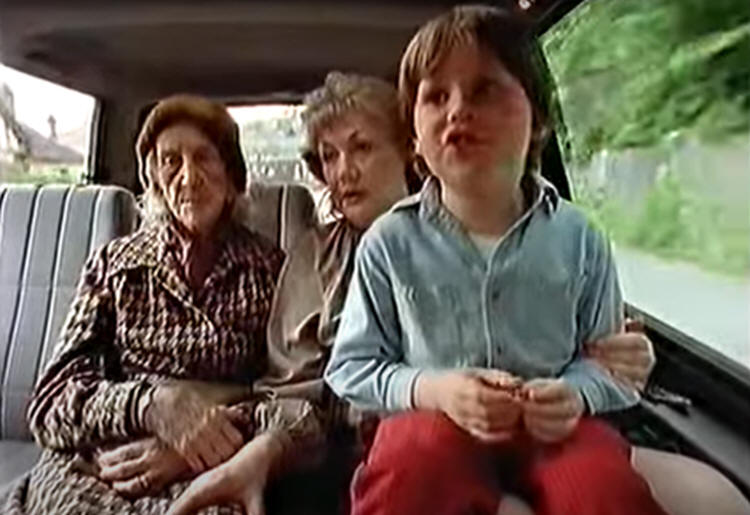
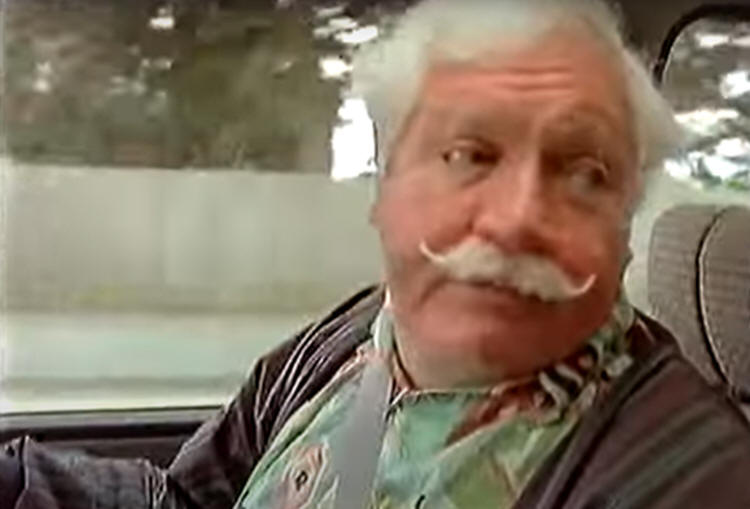
The Road to Mandalay from 1991. Almost a home movie with similarities to Russell's A British Picture. 35 Minutes.
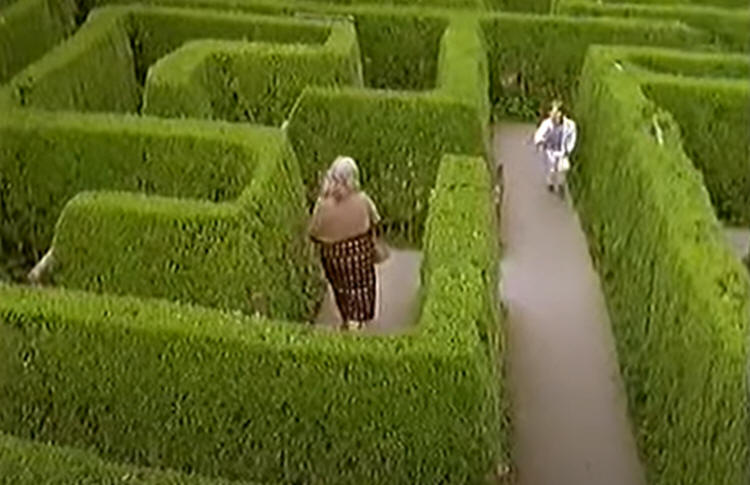
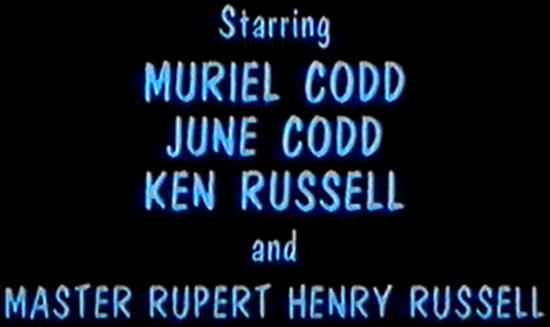
With Ken Russell are his son Rupert Russell and Muriel and June Codd.
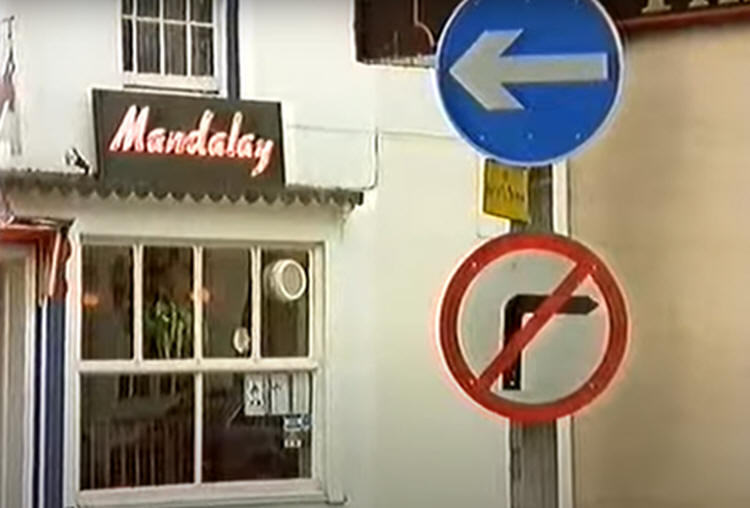
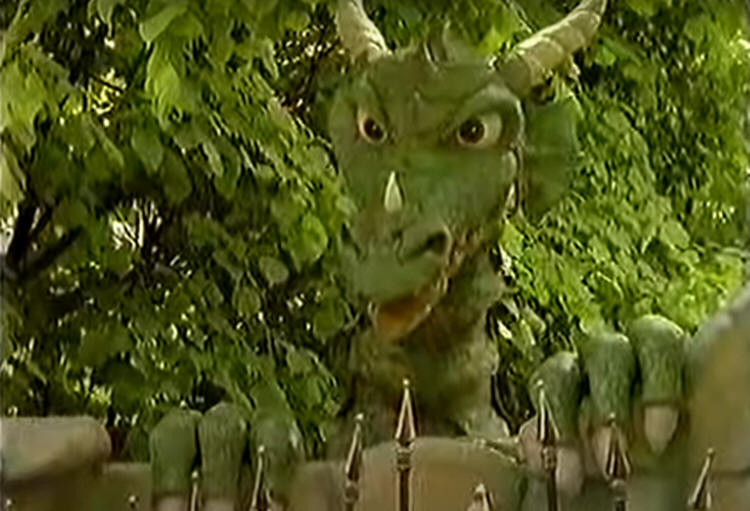
The family try to find the Mandalay restaurant in Southampton.
They keep coming against No Entry roads and seem trapped in the roads of Southampton.
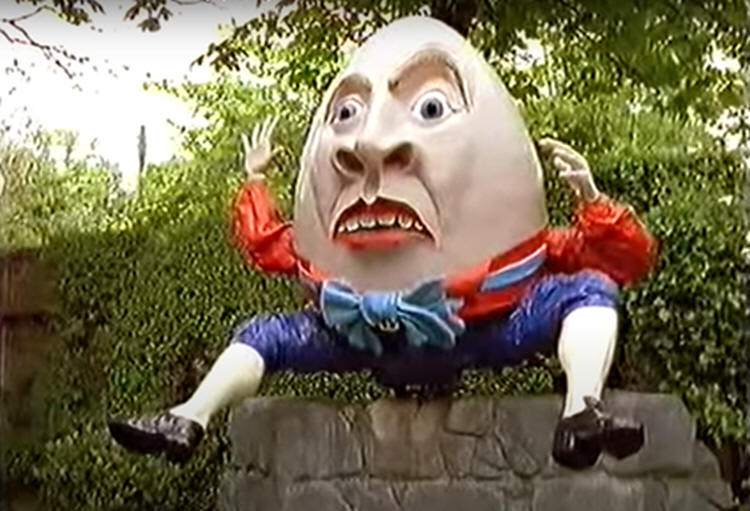
They even seem to be forced to drive on the ferry to the Isle of Man, but Rupert doesn't mind as it has a theme park.
The journey has been like going through a maze, but will they manage to reach the restaurant. Xavier Russell edited and Maureen Murray produced. Directed and written by Ken Russell. The music includes
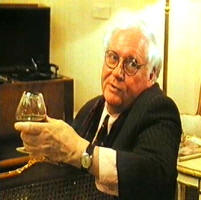
1992 The Secret Life of Sir Arnold Bax Having used Bax´s music in Clouds of Glory, Ken moved on to a biography of the composer himself. Most interesting is that Ken himself plays the role of Arnold Bax. . It is his only serious acting role in his own films, and he carries it off well, looking unexpectedly distinguished, hair combed down, like a later Graham Greene.
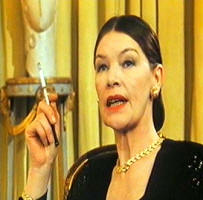
The film has a good performance by Glenda Jackson, her last film before she gave up acting and devoted herself to politics as a member of the British parliament and government. The plays Harriet Cohen, pianist and long time lover of Bax.
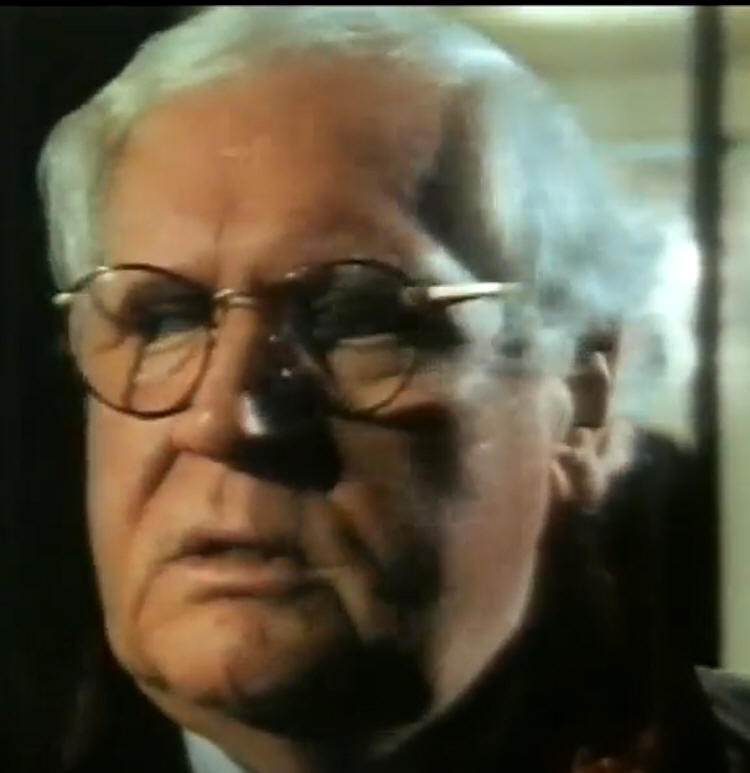
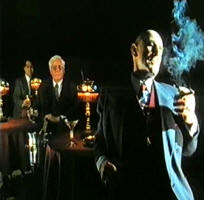
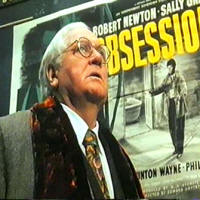
In a smoke filled club Bax (in the background) sees a dancer, Annie played by then wife Hetty Baynes. The film poster of Obsession reveals Bax's state of mind. Later Annie performs the same dance before the passion of the waves.
On the commentary to the Salome's Last \Dance DVD, Russell says he was the same age as Bax in the film, so just decided to play the role himself. Part of the story deals with Bax as a major artist who has lost his public, which would appeal to Ken. The film is reasonably conventional, some episodes from the live of Bax, but misses the vivid imagery of Russell. A nice scene has Bax sneaking into a cinema to watch the end-credits of David Lean´s Oliver Twist to hear his own music. Other actors are Melissa Docker (who would work on Russell's next film Martinu) and Russell regular Kenneth Colley. As on the Bruckner film, the Director of photography is Robin Vidgeon (who also did Lady Chatterley), camera by John Vidgeon and costumes are by Victoria Russell. Xavier Russell edits and producer Maureen Murray makes a brief appearance (she would appear more in In Search of the English Folk Song). "... the scene that's burned into my brain- as I remember it - is when Russell's Bax takes another woman, a dancer called Annie (played by Russell's then wife Hetty Baynes), down to the beach for a truly extraordinary erotic rendezvous. Sitting on a deckchair on the sand, Russell/Bax puts his tone-poem about the sensual power of the sea, The Garden of Fand, on a wind-up gramophone as his paramour cavorts in the sea, becoming the sea-siren that Bax's music celebrates. At the climax of the scene, with the underscore of Bax's most passionate music, composer and consort entwine in an encouplement that was more elephantine than elegant. The Bax film probably isn't Russell's finest about music and musicians- his Delius, Mahler, and Elgar movies take pride of place in that pantheon- but it symbolised what I liked about his films so much: that he was unafraid of celebrating his eccentric musical obsessions, and that he tried to get inside the psychological and emotional realities of the composers whose music he loved" (Tom Service, The Guardian, 29 Nov 2011, click here). The music is:
All images from the film.
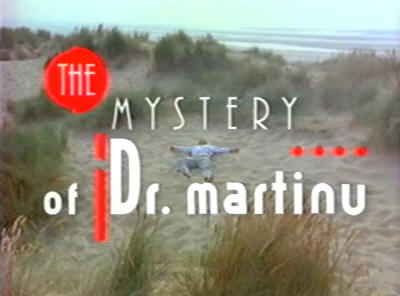
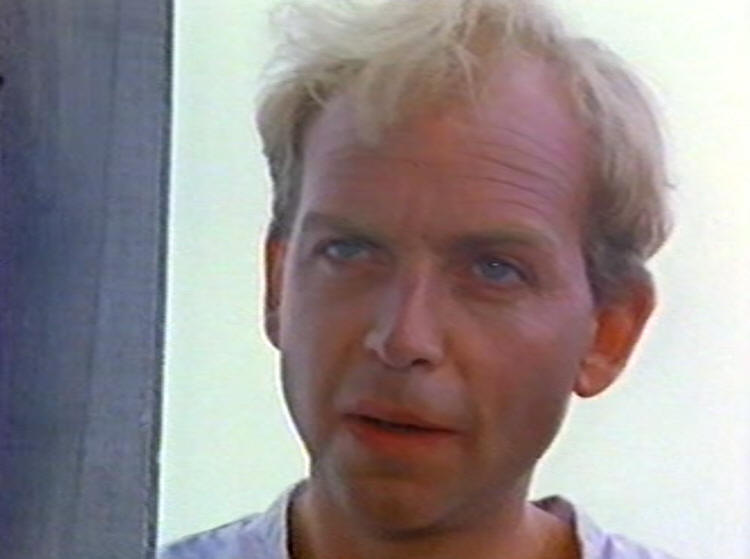
The Mystery of Dr. Martinu subtitled A Revelation by Ken Russell from 1993. This is Freud meets Buñuel´s Een Chien Andalou meets Hitchcock (Spellbound and Vertigo). This biographical film of Czech composer Bohuslav Martinu is in two parts: the first part a recurring dream with little real dialogue, the second a Freudian analysis of the dreams, also revealing the mystery of the title.
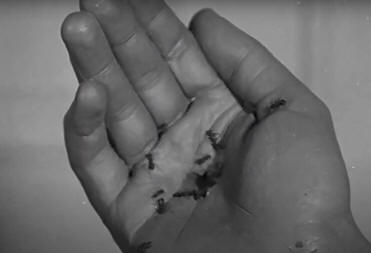
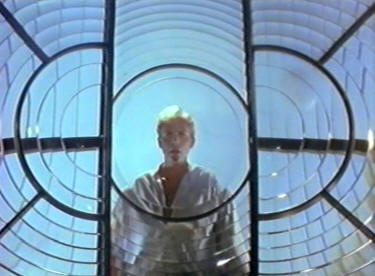
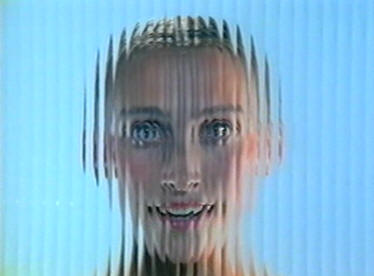
Martinu wakes and his hand is covered with ants- a reference to Luis Buñuel's surrealist film Un Chien Andalou (above right) from 1929- he brushes them off and heads towards a lighthouse. Russell based the lighthouse on Martinu's writings, "[Martinu] created his own childish world, which always remained with him at some deep level 'Entirely isolated from the outside world as if in some lighthouse, I had nothing to do for work or for entertainment than to record in memory various pictures which could be seen from the tower... everything in miniature, with small houses and little people, and above them a vast and boundless space' Martinu considered his unusual childhood in the tower one of the most important impulses behind his work" (from Lucie Berna, Bohuslav Martinu: A View of his Life and Music, 2009, published by the Bohuslav Martinu Institute). A nude girl, Slava, is always before him as he climbs the steps. This image of Slava repeats itself in various forms.
Martinu and Slava filmed through the lighthouse lens ephasising the dreamlike ambiguity.
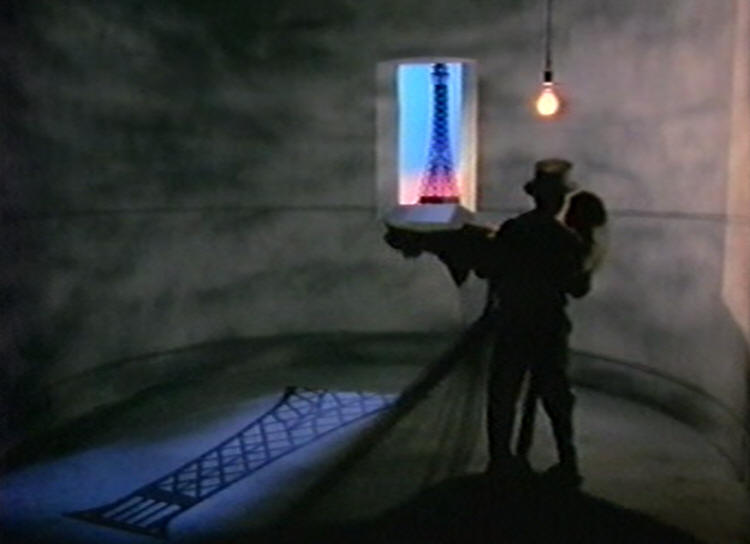
The lighthouse becomes Paris where Martinu and wife Charlotte emigrate to. The scene shows Russell's mastery of the image. Note also the Eiffel Tower has the colours of the Czech flag.
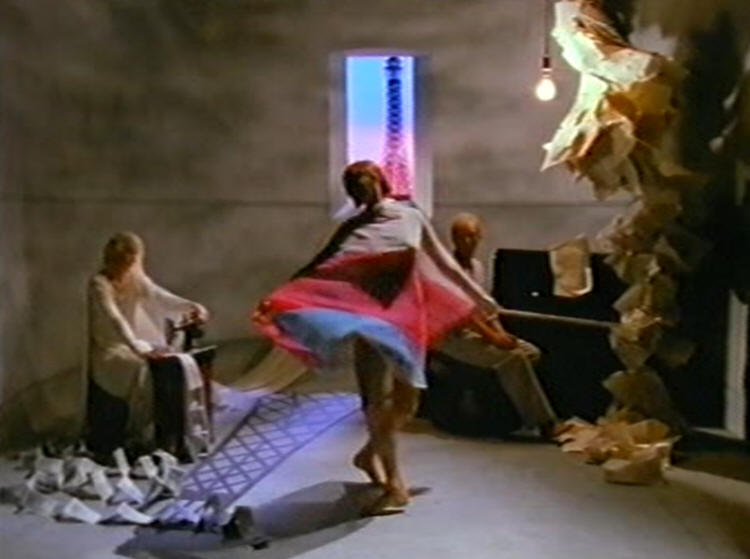
Charlotte works on her sewing machine to make money while Martinu piles up draft manuscripts and dreams of Slava. Russell bases the framework of the film and the dream-like Slava on Martinu's opera Juliette "The work's central charcter, Michael, lives in a perculiar world straddling dream and reality. The mysterious girl Juliette, with whom he falls hopelessly in love, appears to him and then vanishes as a dreamy phantom" (Lucie Berna, ibid). "Julietta, or the Key to Dreams (1936-7) was his masterpiece for the stage. Martinu was fascinated by the interplay of the dream-world with reality, and in Julietta the protagonist Michel’s dilemma, his tragic uncertainty whether his passionately-loved Julietta is a real person or a figment of his imagination, is explored in Martinu’s most glowingly lyrical music" (Calum MacDonald, BBC Music Magazine, June 2012). Russell's project Angels, which was never made, was based on Georges Neveux´s play Juliette which Martinu made into the opera.
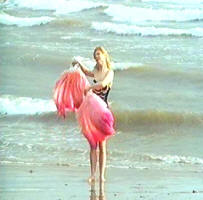
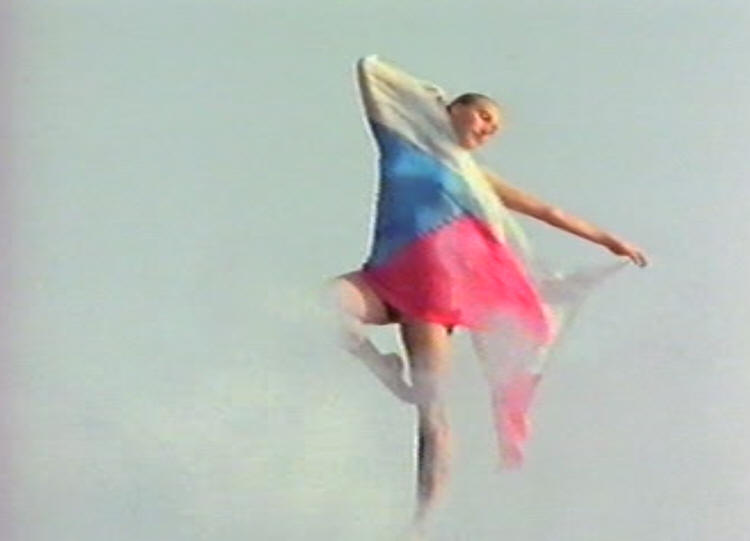
Slava dances wrapped in the Czech flag.
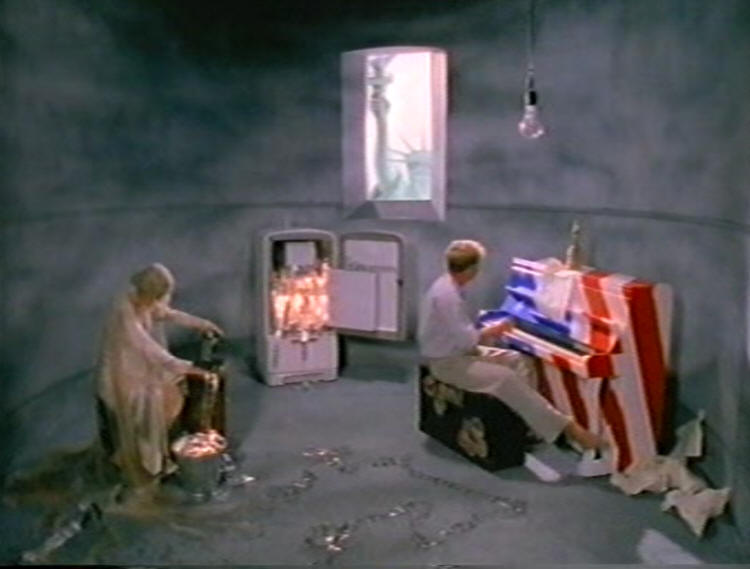
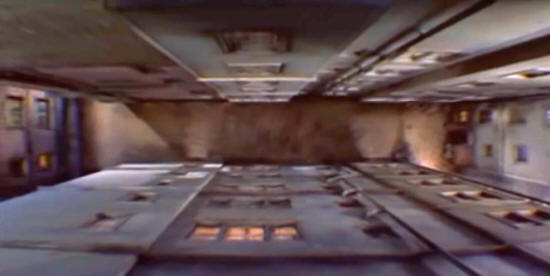
When the Nazi's invade Paris the Martinus move to the USA and now the lighthouse serves for New York.
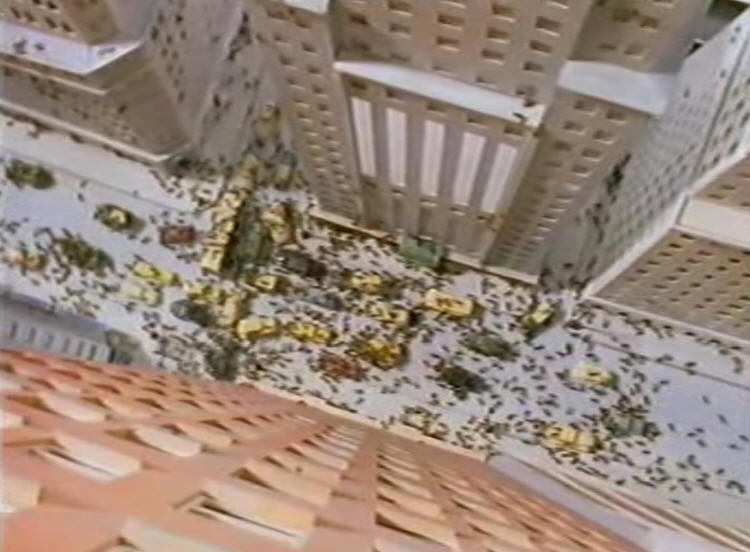
The vertigo inducing view from the New York upper floors where people seem like ants, except Russell actually uses ants, scrambling over models. There are reference to Hitchcock's Vertigo (above right) and similarly in both films characters fall to their death, except in Russell's film the deaths are part of dreams.
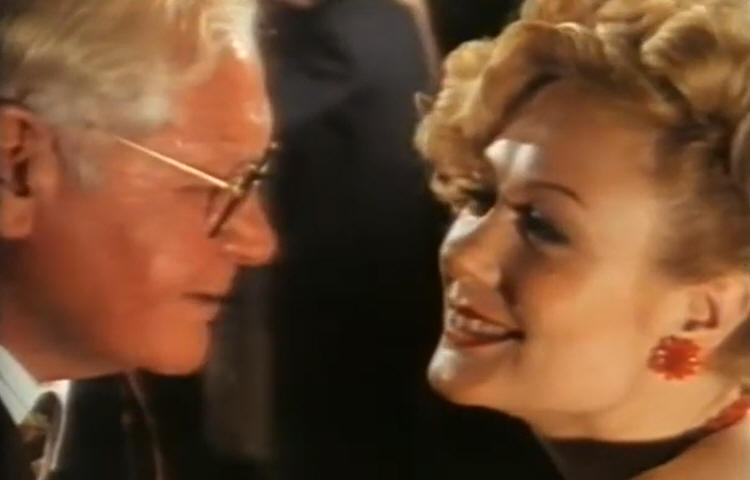
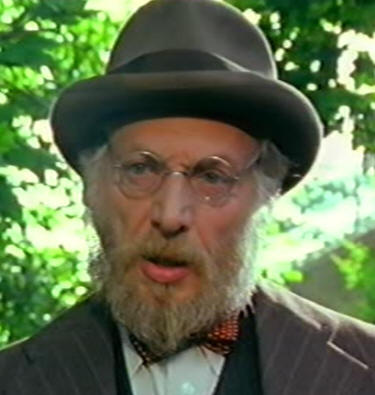
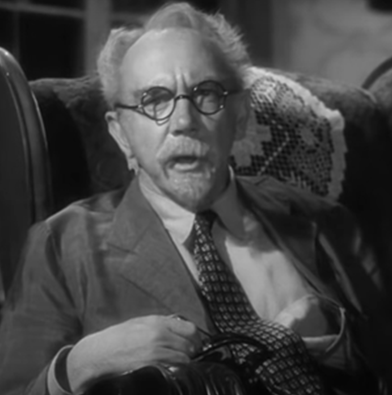
Professor Mirish helps Martinu understand his Freudian dreams and unravel the mystery, just as the similar looking Dr Brulov (above right played by Michael Chekhov) helps Gregory Peck in Hitchcock's Spellbound. A beautiful film and as with all of Russell's music biographies he lets the music drive the film. The music by Bohuslav Martinu includes
The credits list locations including The Old Lighthouse, Dungeness and the Romney, Hythe and Dymchurch Railway. The children are similar to those dancing in Isadora Duncan. Patrick Ryecart plays Martinu- he would go on the appear in
Russell's Prisoner of Honour. Shauna Baird plays his wife
Charlotte, Hannah King plays Slava and has an "and introducing"
credit, and Martin Friend plays Professor Mirisch. The Director of Photography was Robin Vidgeon who went on to direct Russell's The Secret Life of Arnold Bax and Lady Chatterley. Camerawork was by Russell credited as Alf Russell. The editor was Xavier Russell and costumes were by Victoria Russell. The producer was Maureen Murray who appears as herself in Russell's English Folk Song.
All images from the film. |