|
The TV films are disappointing. I suspect Russell accepts these commissions to raise money/survive so that he can makes films that interest him. The division between TV and film is arbitrary: Mindbender is a film but could be TV, Dogboys could be a film. All are in the "straight to video" category. Has he lost his talent? No, he has lost his budget. For an example of Russell close to great look at a late film Whore. And recent films such as Brighton Belles and Elgar show his talent is still there.
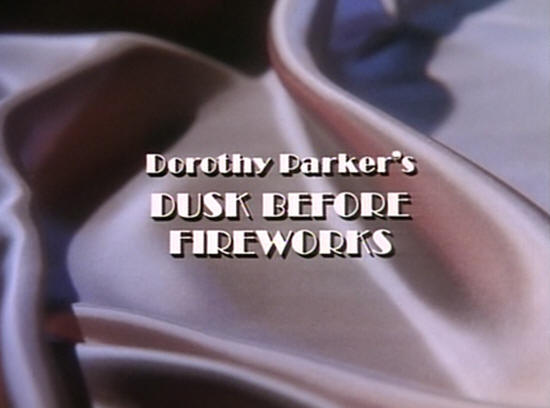
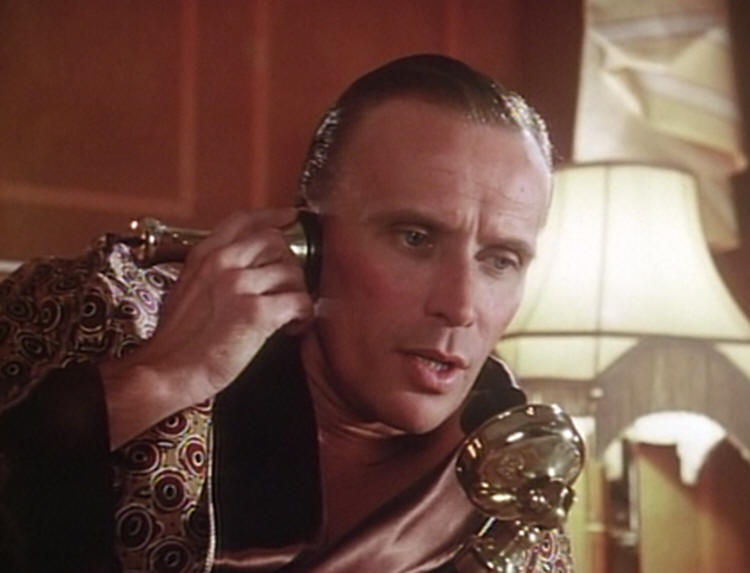
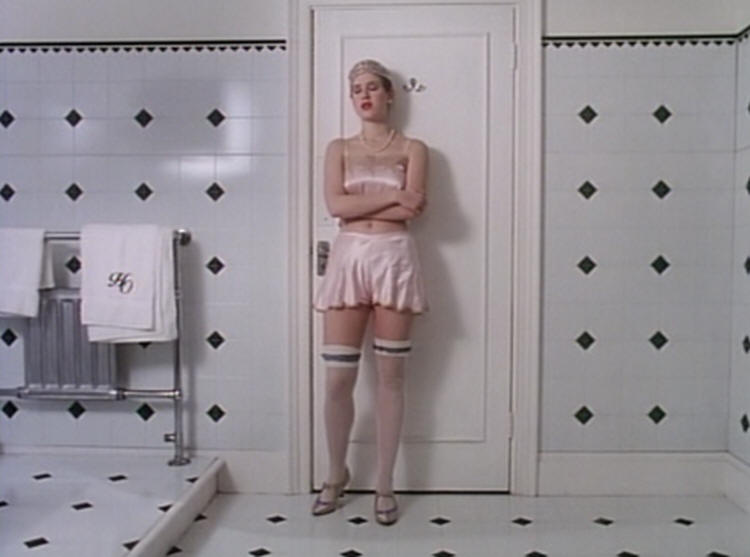
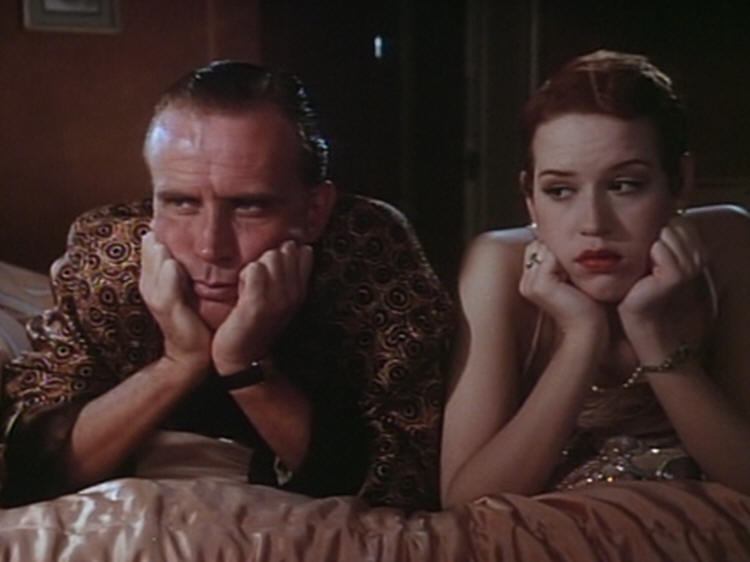
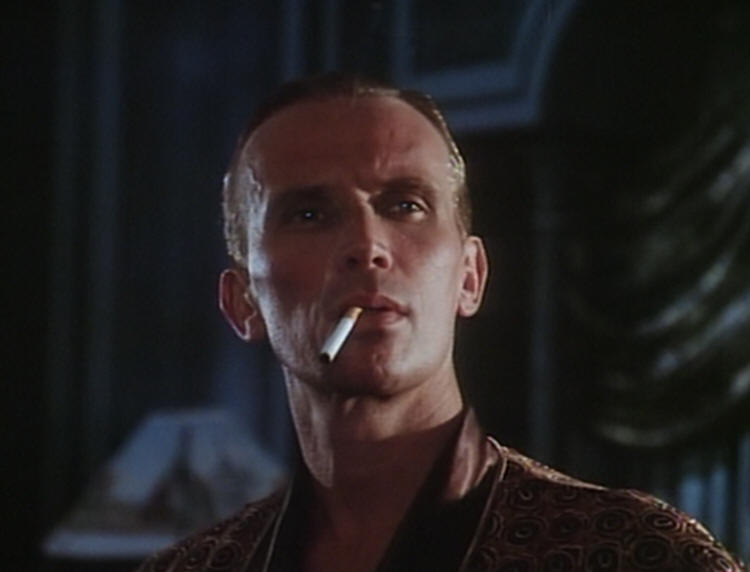
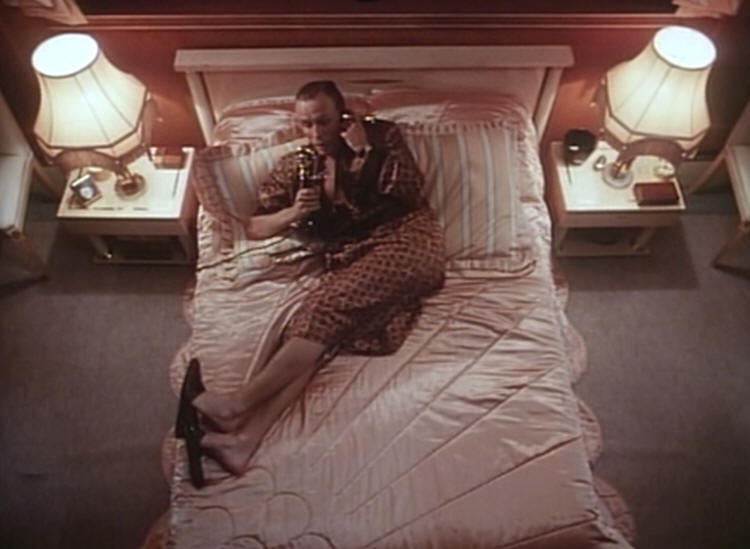
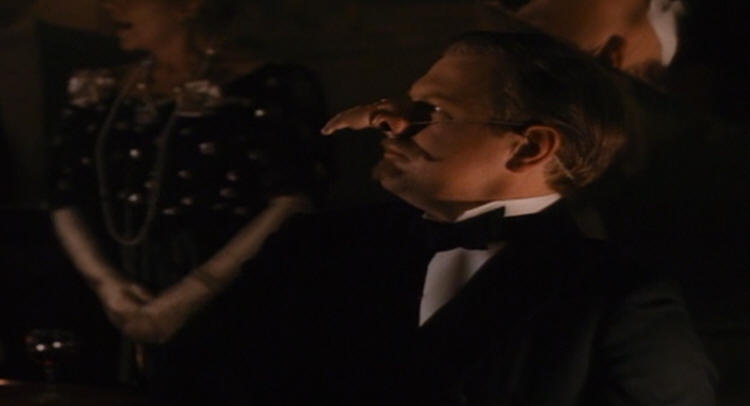
Women and Men, Stories of Seduction from 1990. Three short films each by a different director, each based on a minor story by a great writer (well two great writers Hemingway and Dorothy Parker and one good one Frederic Raphael), each about a man tring to seduce a woman. Russell directs as does Frederic Raphael and Tony Richardson. None are very interesting. Russell's piece is Dusk Before the Fireworks based on Dorothy Parker's short story. 26 minutes. Molly Ringwald (Pretty in Pink) as Kit and Peter Weller (Robocop) as Hobie are lovers but his phone keeps ringing as his other lovers phone.
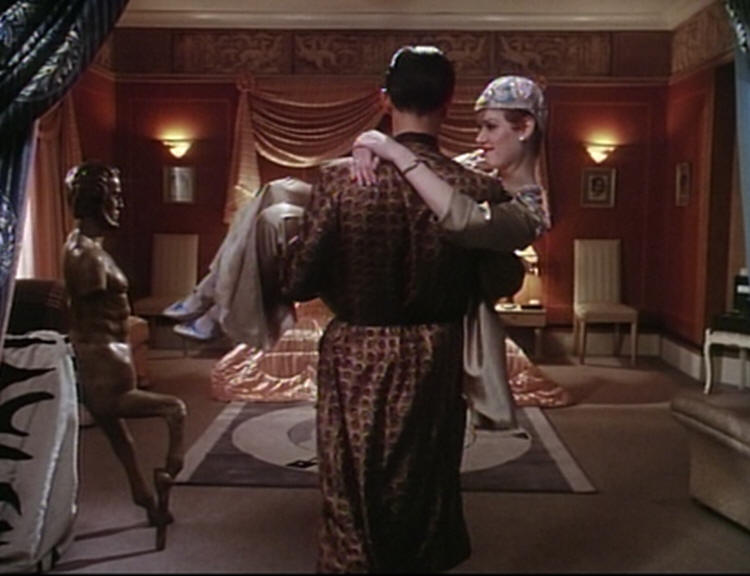
The seduction begins...
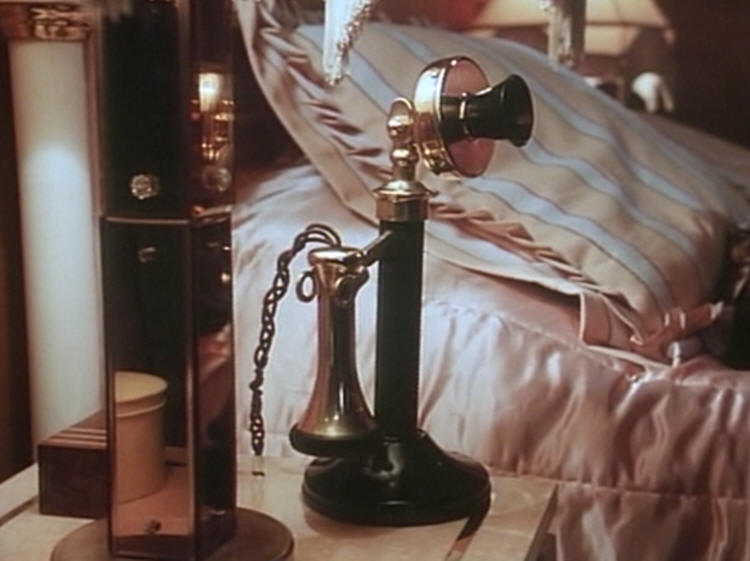
... and the phone rings.
Fed up Kit leaves.
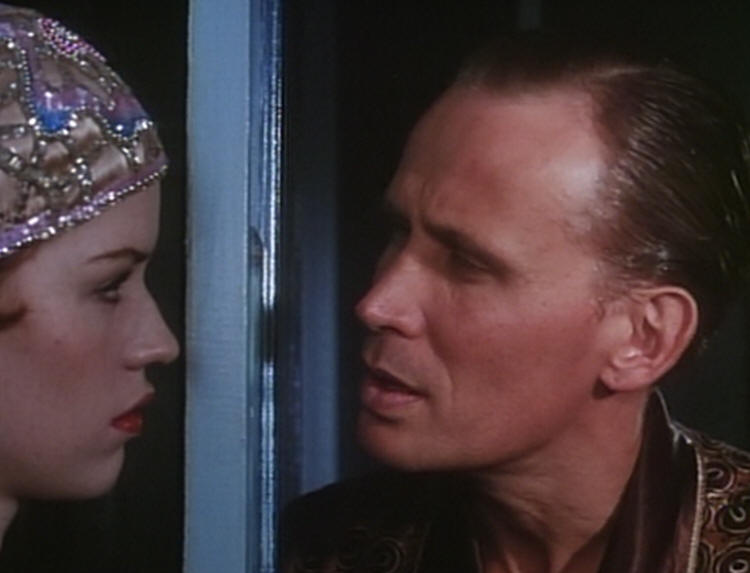
But it is not long before the phone rings and Hobie arranges to meet another lover. Neither actor seems comfortable with
the dialogue ( Valerie Curtin adapts Dorothy Parker's short story for television. While the film is faithful to the plot of the short story, none of the wit and humour come over, for example "She says she has something she wants to tell me... She says it is too hard to say over the phone / Then it may be her age... She's afraid it might sound like her telephone number" is a brilliant joke, but is delivered poorly. The editor is John Jympson and Russell regular Billie Williams is director of photography, with his usual finesse. Filming was in Shepperton Studios, UK. The music is hardly noticeable, but the credits list:
Film website imdb.com claims Ken's film was "re-cut and re-scored by the studio after filming finished. Russell refused to watch the released film" (from here accessed 25 Jul 2021). They give no source and I have not been able to confirm it.
All images from the DVD.
Prisoner of Honour from 1991. A very tiresome filming of the Dreyfus case, a true story in the nineteenth century of a French soldier convicted of espionage. But it became apparent Dreyfus was a victim who was framed, mainly because he was Jewish. Emile Zola the French novelist took up his case with the famous article J´Accuse (I Accuse), Graham Greene later exposed corruption in Nice with the same title. The film starts promisingly, "Judas sold Christ, Dreyfus sold France" but after seconds descends into mediocrity. The period pieces look very staged, the African scene is clearly a tiny studio, the police holding back rioters look like actors careful not to hurt fellow actors . Some of the anti-Semitism from the time, as part of a cabaret act "We’re not safe with filthy yids around".
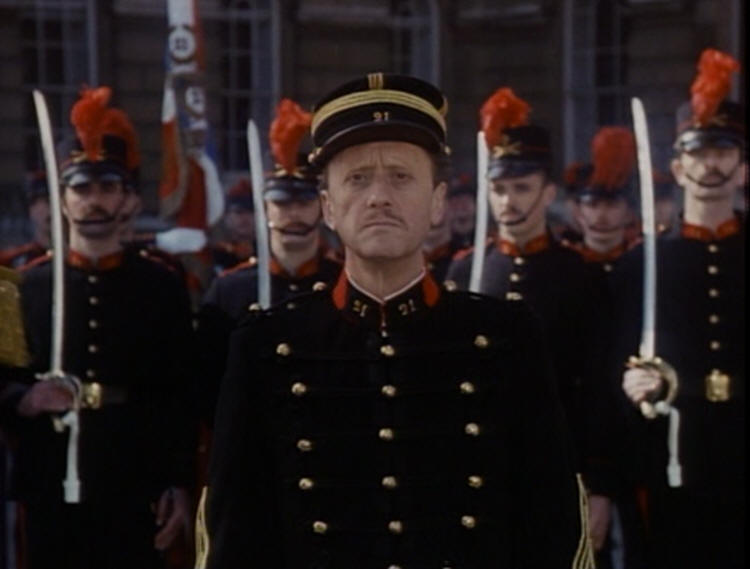
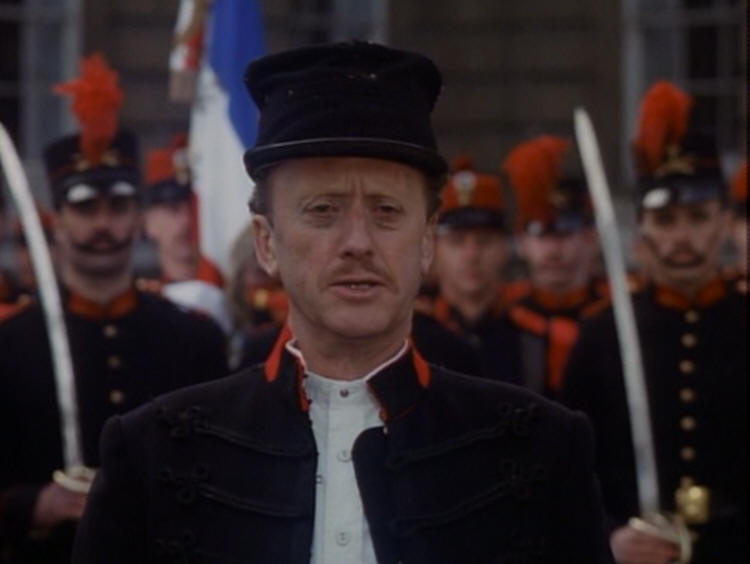
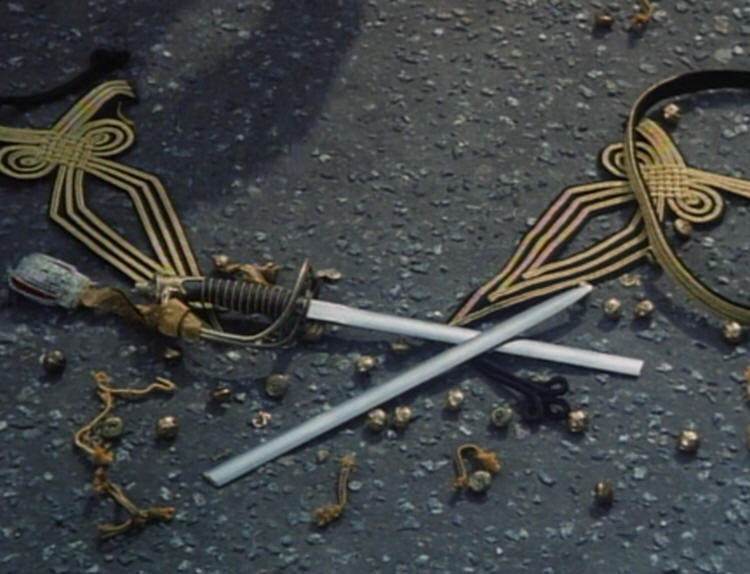
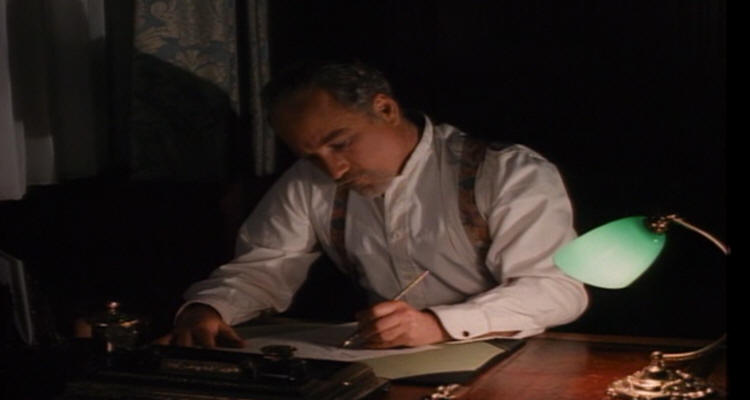
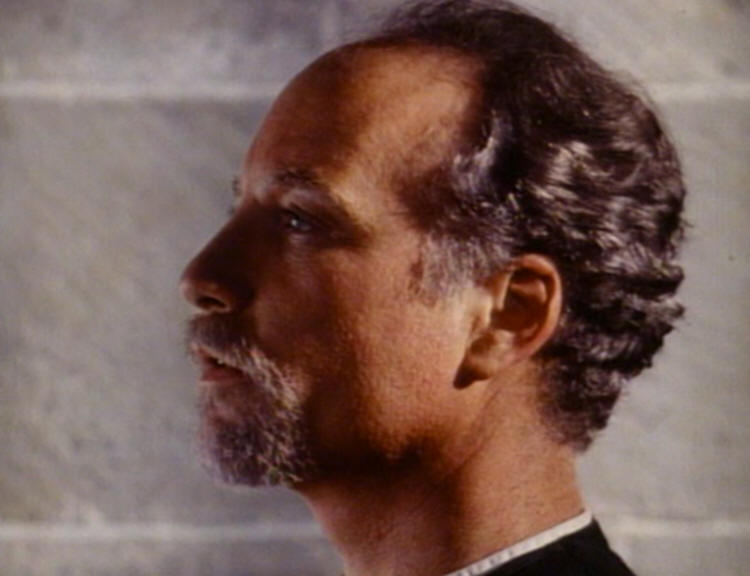
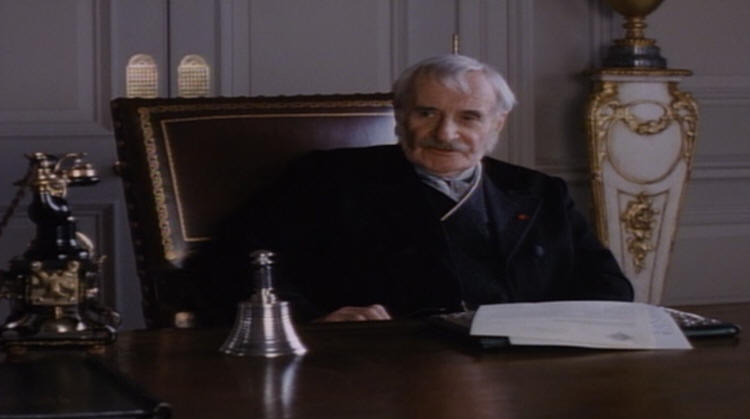
Dreyfus, played by Russell regular Kenneth Colley, is stripped of his military honours and his sword broken.
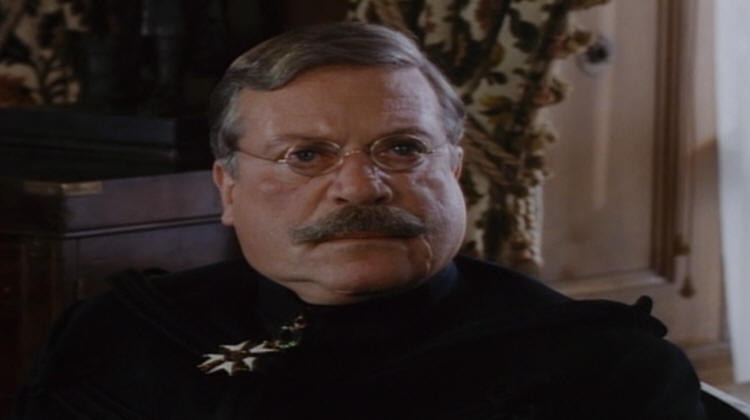
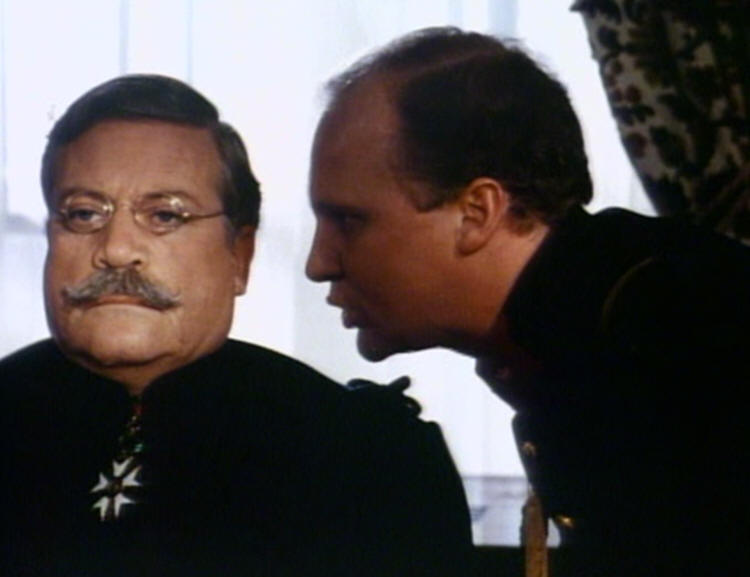
Richard Dreyfuss stars. Did he do it just because of his surname (the name differs slightly)? His acting is stilted. The only person who shines is Oliver Reed who's acting is restrained and convincing, with a measure of cynicism. He is really good, though Russell says "it wasn't the same Oliver. He was a different man".
Lindsay Anderson, the director of legendary films This Sporting Life, If..., Look Back Anger appears as the Minster of War. The film plods along without generating any interest. Dreyfus as a character appears too infrequently to be important, neither is Picquart´s (Richard Dreyfuss) dilemma of honour and justice interesting, the anti-Semitism is off-hand and neither personal or threatening, and the political machinations (given the title- they were all prisoners of honor- the theme of the film) are tiresome with meeting following meeting, trial following trial.
Other actors come across as actors wearing brand new costumes and fake moustaches. Editors are Mia Goldman and Brian Tagg, and photography is by Mike Southan, though Russell also operated camera a lot. The film was shot at Pinewood studios in London.
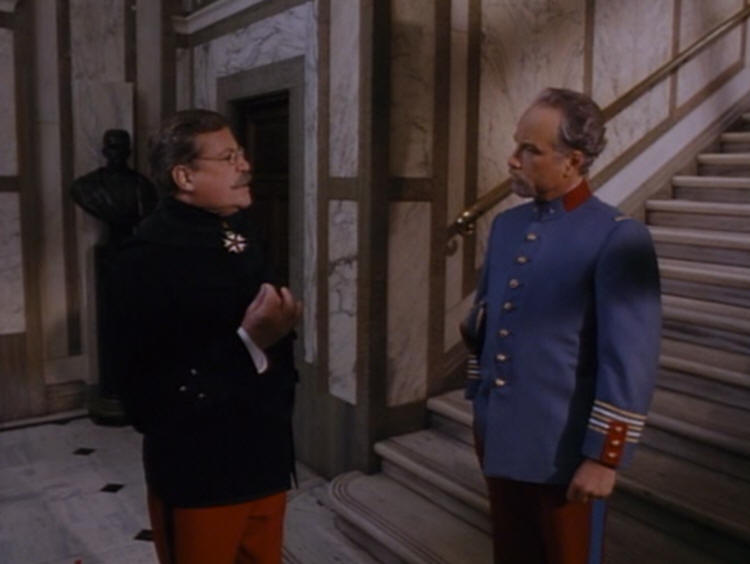
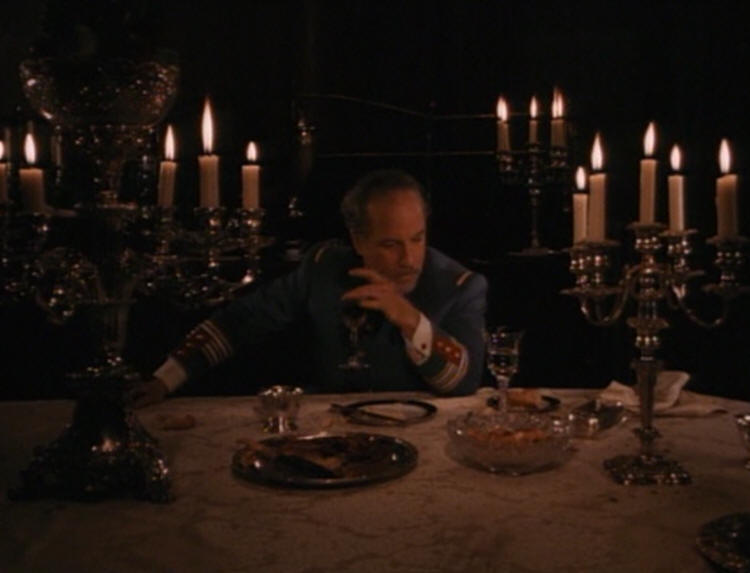
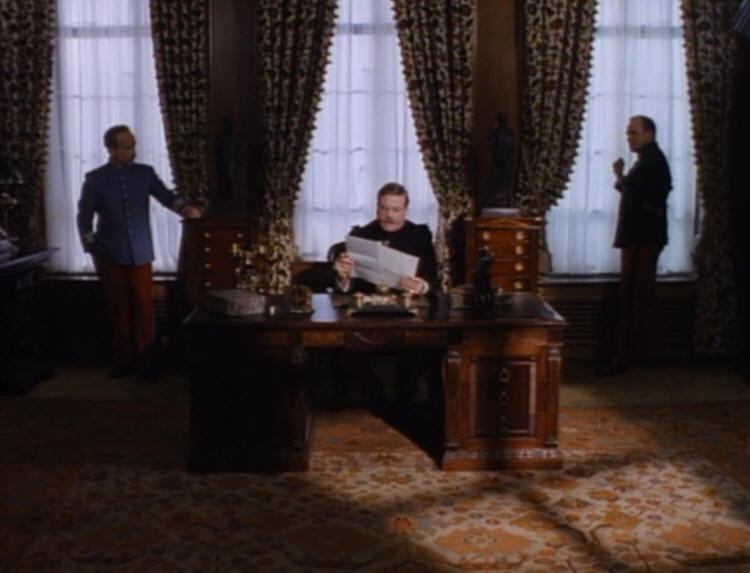
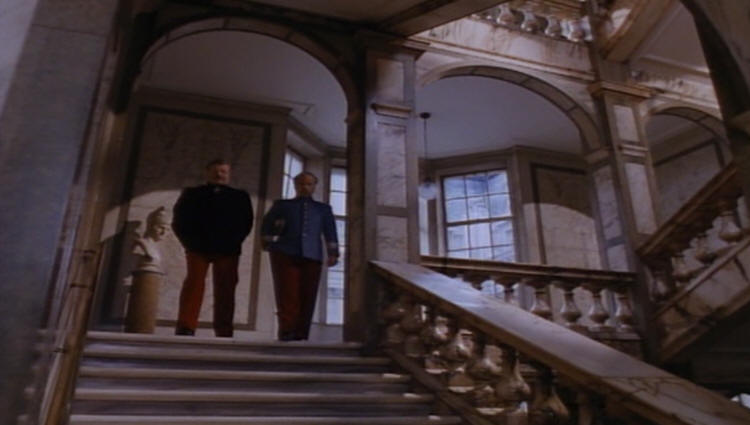
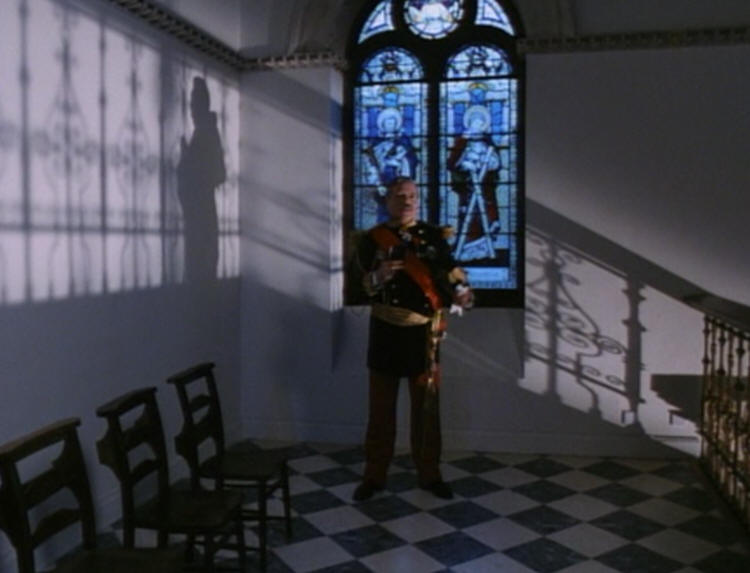
Russell composes his shots carefully. The composition
is often perfect.
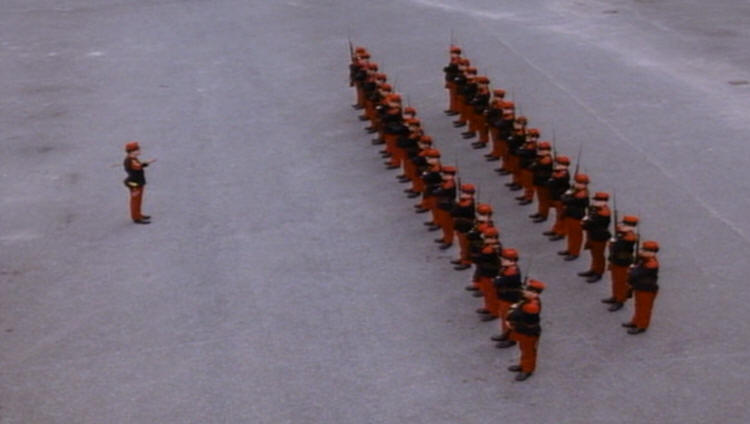
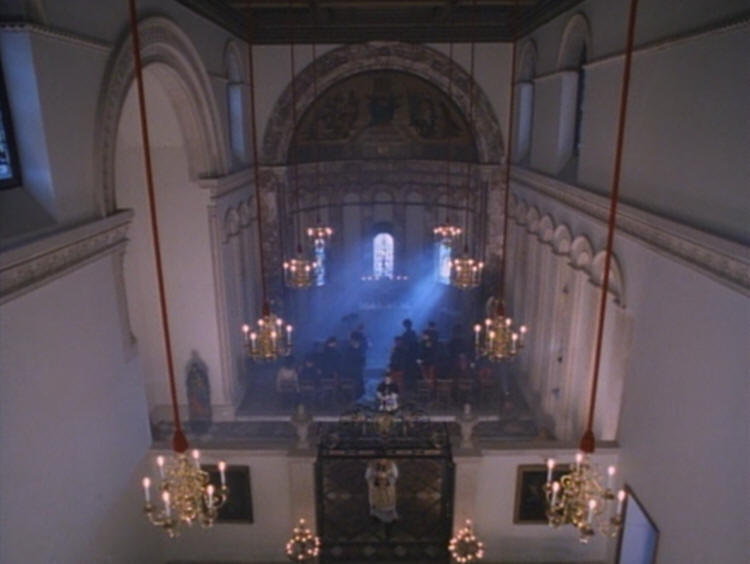
The candle-lit scene would be used again in Lion's Mouse. There are some brief moments (brief seconds) when Russell becomes interested in the film: the night club singer (Imogen Claire) white faced in a black/red costume with long black gloves looks like a spider; the lines of red uniformed soldiers filmed from high up looking like a row of cherries; the stage show with "Dreyfus the vampire", the police artist drawing the suicide victim's hand holding the razor (compare the opening drawing of Savage Messiah). But I longed for a dream sequence with snakes and nuns.
Cinematographer Mike Southon says "This was my second film for Ken . It was a somewhat fraught production as the star of the film , Richard Dreyfus, was also the producer and there was a degree of tension (to say the least) between Ken and Richard particularly over Ken's sparing use (and shooting )of close ups.. Ken tried to avoid having the material recut by shooting only what he felt he needed and tended to opt for wider group shots without cutting into them. That was his style and he used it reasonably successfully on Gothic. It should also be pointed out that Ken operated the camera himself (similar to Gothic) so anything other than a static close up was beyond his capabilities as an operator" (from Mike Southon website click here). A couple of Russell themes are present: a steam train, a photo of a child in a sailors costume.
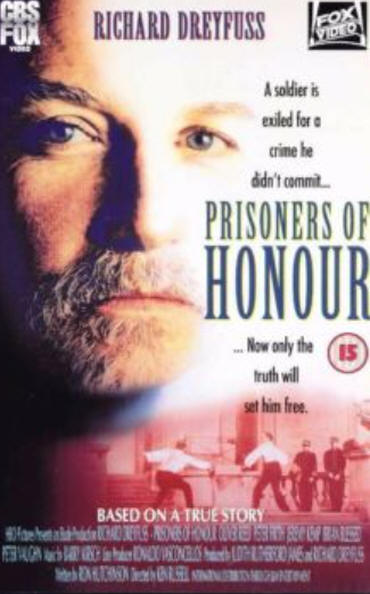
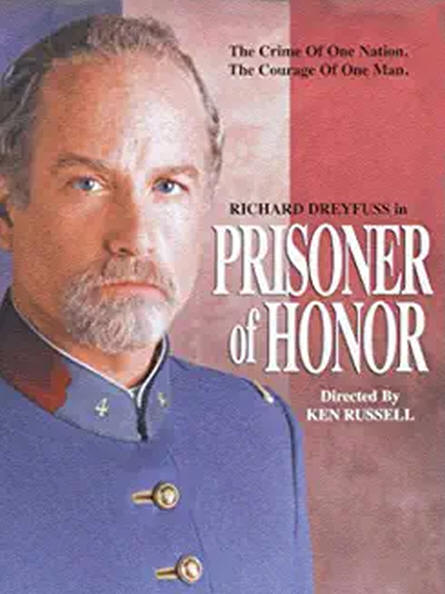
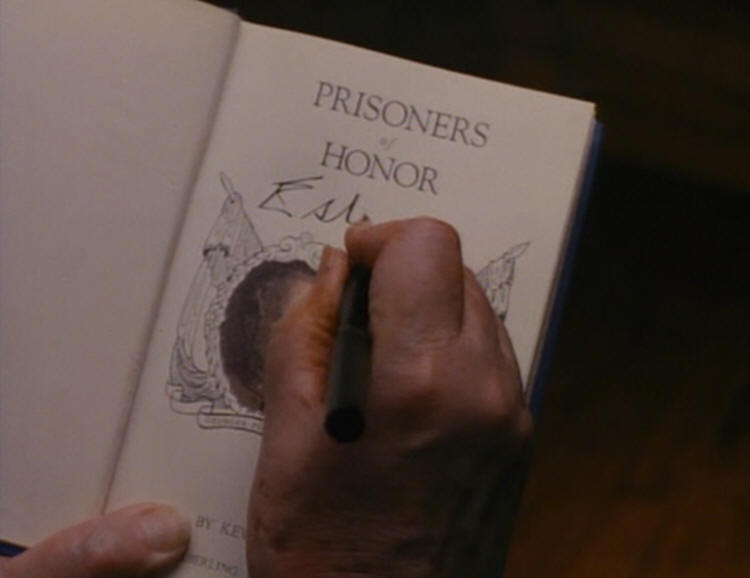
Note the minor differences in title on the video covers. Prisoner would refer to Dreyfus, Prisoners would state they were all prisoners of honour in their own way. As well there are the British and American spellings of Honour/Honor. The book shown in the film is called Prisoners of Honor.
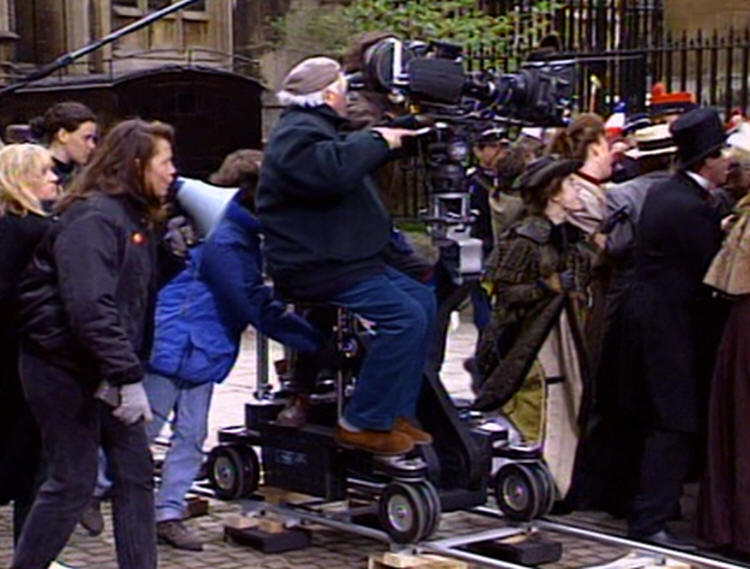
Below Ken Russell filming a crowd scene.
All images from the DVD or the Making of documentary as well as two
video covers.
|