 |
Steve Bornfeld, Las Vegas Weekly, 28 June 2005.
Photo by Keith Shimada He's not a traditional,
concept-driven director... He wants to know what we are, for us to be
the people who do the play, to use raw materials we bring, rather than
applying materials to us. It was unsettling, but became so liberating,
like flying, soaring, sinking into some amazing Jacuzzi. |
 |
Naledi Theatre Awards Ceremony 13 Feb 2005
A moving highlight of the evening was the presentation of
"Life-Time Achievement Awards" to no less than 15 stalwarts of our SA
stages: Lilian Dube, Smal Ndaba, Phyllis Klotz, John Kani, Winston
Ntshona, Fiona Fraser, Wilna Snyman, Michael McCabe, Neels Hansen, Joyce
Levinsohn, Nomhla Nkonyeni, Dale Cutts, (who is recovering from a recent
stroke), returned exile, Zakes Mokae, and a posthumous award to Dolly
Rathebe, which was accepted by her son. |
 |
702 Talk Radio, 1 Jan 2005

|
 |
Ken White,
Review-Journal, 7 Mar 2003 Interview with the
actors being directed by Mokae in Road to Mecca.
"Doing a Fugard play with Zakes Mokae is nirvana... other people
can talk academically about Fugard, but Zakes developed Fugard's works
with Fugard... Mokae is a real actors' director....His approach is
organic."
|
 |
City Stages News, March-April, 2003 About
Road to Mecca.
Zakes is such a jolly fellow and has such deep personal insights
into the play and its relevance in contemporary times, that it felt
right to plan a 2003 production.
|
 |
Erin Auerbach, Las Vegas Mercury 20 Mar 2003
The Road to MeccaNevada Shakespeare Company brings this
vibrant character to life under Zakes Mokae's thoughtful direction. In
fact, the outstanding performance just about overcomes some major flaws
in the over-indulgent playwriting, creating a satisfying evening of
theater...
There's a chaotic sense of two women at major crossroads in their
lives, which director Zakes Mokae weaves together beautifully. Their
impatience and excitement around each other when Elsa first arrives
feels natural and brings out the potential in Fugard's writing...
Luckily, the fluid direction saves the play and makes you look at
all that is beautiful about life, even in the midst of all that's
perilous in the world around us. More importantly, you leave wanting to
learn more about Helen Martins, the sculptures she made, and why
creativity can often invoke fear and scorn rather than praise and
enlightenment...

Photo by Ginger Mikkelsen
|
 |
Pianosa
Group About
the play Blood Knot.
Zach and Morris escape
into their game-playing and live in their dreams. But,
they ruefully admit, white South Africans "don't
like our playing games with their whiteness"; and,
they observe, if they ever want to arrest you, "all
they need for evidence is a man's dream's."
|
 |
Neon, Ken
White, 12 Mar 1999
Mokae as stage director."No, no, I'm more into
directing now," says Mokae during a recent
rehearsal. "I leave acting to the actors. I've been
acting for too long. It makes sense for me now to move
from acting to directing."
He hedges a bit, saying
if a good role comes along he'll probably do it. But he
seems to have been bitten by the directing bug.
"It's about sharing ideas when you direct,"
Mokae says. "I like to work with actors. Being an
actor myself makes it easy."
What isn't easy is the
hard work that goes into preparing for a role. Mokae
likes to do a lot of table readings and pre-rehearsal
work before blocking the action and getting the play on
its feet. With the proper preparation, "when they
ask you questions in rehearsals, you're able to give them
an answer that is satisfactory to them," Mokae says.
"It's fun but it's a lot of work."
|

|
Youtube
Part of Dust Devil in Italian. Just
under 10 minutes. |
 |
Ken White,
Las Vegas Review, 16 Aug 2002 (link has gone) Mokae directing Bryan Harnetiaux´s
play National Pastimes.
Mokae is quoted as
saying: "It has something to say.. It's about a guy who achieved
what he wanted to achieve. For me, apart from the politics, it was
interesting because baseball people really get involved in the sport." |
 |
Ken White,
Las Vegas Review, 18 Feb 2001
photo by Ken White.
There
are good actors here [Southern Nevada ]. But we need a
theater here and we need it badly," Mokae says.
To
that end, he is trying to establish what he calls the
Theater Lab, in which there would be not only
performances of a variety of material, but also workshops
in writing, acting and all aspects of technical theater
that he sees as a way to get younger people involved in
the arts.
It
requires a building for starters, which can be built or
an existing building renovated into a theater. Mokae has
been scouting for a location and seeking money to get the
company started. He figures it will take $250,000 to run
the company for the first year.
"It
just needs to be pushed a little," he says. "It
can be done."
|
 |
Leonard Greene, Boston Herald 4 Jun 1996
Memories of Cocky Two Bull Tlhotlhalamaje.Tlhotlhalamaje has
spent more days than he can remember on Eloff Street. When he was coming
up with Hugh Masekela, Zakes Mokae and a host of other South African
performers, he spent endless nights in jam sessions at the Dorkay House,
South Africa's answer to Harlem's Apollo Theater.
|
 |
Metro,
1995
In Seven Guitars."In
another strong performance in an exceptional cast, actor
Zakes Mokae commands attention with an intense conviction
to character when ranting about a mythical man who'll
bring him riches, his dream of owning his own plantation
and an episode in which he confesses to killing a man who
made fun of his birth name."
|
 |
Iris Fanger, Boston Herald 15 Sep 1995
Seven Guitars
Seven Guitars takes place in 1948, when three musicians are
trying to make their way from Pittsburgh to Chicago to cut another
record. But for their leader, Floyd "Schoolboy" Barton, the sands of a
lifetime have run out.
The seven characters - the musicians, their women and a mysterious
neighbor - speak in an eloquent poetic vernacular of the backyard where
they come together. The words that Wilson has given them carry both the
resonance of their heritage and the cadence of the blues, tangled up in
the longing of the spirit. These are people who have done without for
too long, and now their needs must be considered. The dialogue is at
once simple and profound.
Keith David makes an edgy Barton; Zakes Mokae a mesmerizing
presence as Hedley, the Bible-chanting, visionary figure of doom. When
they sink more fully into their roles, they will be Tony Award nominees
for sure.
|
 |
TIME Domestic, 3 Jan 1994 (link has gone)
In The Song of Jacob Zulu.A short reference
"Yourgrau's play about the making of a black South
African terrorist was raw but unforgettable in Eric
Simonson's epic staging, brought to Broadway by Chicago's
Steppenwolf troupe. K.Todd Freeman glowed in the title
role, Zakes Mokae excelled as several elders...".
|
 |
Gerald Weales, Commonweal 7 May 1993
A review of The Song of Jacob Zulu.
For the most part the characters lack depth, are more types
than individuals, and the brief scenes that recount Jacob's growing
involvement with rebellion are little more than illustrative moments.
These limitations would be fatal to a realistic political play, but that
was never what playwright Tug Yourgrau intended to write. He wanted a
musical chorus of some kind and that happily is what he got when
Ladysmith Black Mambazo joined Yourgrau and director Eric Simonson to
create the work at Chicago's Steppenwolf Theatre in 1992... In a few
cases--notably Zakes Mokae, who plays Jacob's austere but loving father,
the man who betrays him, and a strange tramp-prophet who tries to
persuade him to return to his family---individual actors stand out from
the company, but for the most part they provide the setting for
Freeman's Jacob and Ladysmith Black Mambazo.
|
 |
Twentieth Century Literature, Winter
1993 Are you still working with Zakes Mokae?
Oh, yes. He called me from Los Angeles a few days ago and
left a message on my machine. Zakes is very much part of my life. I've
just spoken of celebrating, and your question gives me a chance to share
with you one of the greatest celebrations I've ever had. Some
twenty-nine years ago, after an apprenticeship, I found my voice and
realized what sort of theatre I wanted to do with a play called The
Blood Knot. It involves two characters, two brothers, one light-skinned,
one dark-skinned. Nobody wanted to do that play except me and an actor
called Zakes Mokae. Neither of us had much theatre experience, but we
sorted out the traffic, we learned the lines, we got together a few
props, and we did that play in an attic space in downtown Johannesburg.
That was the start of it for Zakes and myself. And I had this
extraordinary experience, three or four years ago, of being on a
Broadway stage: the same play, the same Zakes Mokae. In a business like
theatre, which is not known for the longevity of its relationships, the
amount of love that prevails among its practitioners, that really was
something. But then again, you see, so typical of South Africa and its
capacity to serve up paradoxes. Yes, Zakes Mokae is and will always be a
part of my life.
|
 |
Sheila Fugard Twentieth Century Literature, Winter
1993 Nongogo also gave Zakes Mokae his first real chance at
acting. He was to become an influence, especially when he played with
Athol in the ground-breaking The Blood Knot.
|
 |
Mary Benson Twentieth Century Literature, Winter
1993 Immediately, however, he had to decide whether to direct
or to play Boesman. In South Africa he had encompassed both, but in
London the strain might be too great. He chose to direct Zakes Mokae,
who had taken over the role from James Earl Jones in the Off-Broadway
production, would be Boesman, freshly challenged by Athol's direction.
Besides, Zakes's blackness, and his performance potentially so different
from Athol's, would in turn challenge the white actress, Yvonne
Bryceland, a magnificent Lena in the South African production.
|
 |
Gerald Weales Twentieth Century Literature, Winter
1993 When the play opened in Johannesburg, after its New York
premiere, Joseph Lelyveld compared the two Sams--Zakes Mokae in New York
and John Kani in Johannesburg. "Mr. Mokae's Sam was a large and complex
presence on the stage, self-liberated and expansive. Mr. Kani's Sam is
taut and inward, strained when he laughs and never, it seems, unmindful
of the tense racial context." I will have to take Lelyveld's description
of Kani on faith, but his account of Mokae's performance is accurate
enough--and yet not complete. The slightly chubby Mokae, who danced with
such grace at the beginning of the play, moved with the same precision
at the end, but with leaden reluctance in his steps. "Little man you're
crying," the song says, and Vaughan is singing for both Sam and Hally.
|
 |
Gerald Weales Twentieth Century Literature, Winter
1993 Yet at the same time Pogrund introduced him to a
remarkably talented group of people in Sophiatown, including Lewis Nkosi,
Bloke Modisane, Can Themba, Ken Gampu, and, most important of all, an
untrained bit-part film actor, Zakes Mokae. Fugard cast Mokae as a
township thug in No-Good Friday, and then wrote the role of Blackie,
Queenie's crippled and violent hanger-on in Nongogo, especially for him,
and this, Fugard said, "was the start of one of the really rich working
relationships of my life" (Benson "Keeping" 78).
Fugard and Mokae actually met through the nonracial artists'
equity association, the Union of South African Artists--or Union
Artists, as it became when it acquired Dorkay House, the ex-clothing
factory where township talent was presented before mainly white
audiences in Johannesburg during the late 1950s. Johannesburg-born and
bred, Mokae had attended St. Peter's Anglican school in Rosettenville,
where he came to know the Superintendent, Father Trevor Huddleston, on
whom Father Higgins in No-Good Friday was modeled, and who had formed a
jazz band to which Mokae, an accomplished tenor saxophonist, belonged as
a founder member (Hugh Masekela was another).
|
 |
ITDb Cast and production details various
Mokae plays. |
 |
Surfafel G, AllAfrica (link has gone) An interview of
Leelai Demoz, who worked with Mokae on
The Song of Jacob Zulu.
""I learned a lot from [Mokae] and he liked what I did as an
actor." |
 |
La Vegas Review Journal
Mokae on singer Gladys Knight "It's the way she handles a tune, some
people rush into a tune, she takes her time." |
 |
A
Reminiscence by Charles Lee
Mokae and the Annenberg Centre.Includes a cartoon of Mokae by Al
Hirschfeld.
|
 |
The South
African Development Fund. The South Africa Development Fund
is a charitable foundation committed to social change in
South Africa. It works with community-based
organizations to provide financial and technical support
to communities disadvantaged by decades of apartheid
policies.
Mokae is a member of the
US Advisory Board.
|
 |
Hollywood.com
An overviewOne
of South Africa's most famous black actors, Mokae's quiet
strength, charm and resilient good humor have animated
the searing theatrical productions (The
Blood Knot, Boesman
and Lena) of his white countryman,
Athol Fugard with whom he founded the radical theater
group, the Rehearsal Room in the 1950s.
|
 |
Blockbuster
An overview based on Hal Erickson, All Movie GuideAfter
essaying the politically volatile role of Father Kani in Cry
Freedom (1987), Zakes Mokae found
it necessary to move to America permanently.
|
 |
Fences
Las Vegas Review-JournalDirector Zakes Mokae creates
wonderful pacing that carries the viewer through Troy's
stumbles and starts. He always remains true to the
emotional core of the work, letting the shared emotions
communicate the essence of the story, without resorting
to theatricality. Mokae also draws fine performances from
Martha Watson, Leain Vashon, Steven McKenzy, Cameron
Miller and AnSherae Devine.
|
 |
The
Emperor Jones which you can listen
to for free over Internet. With James Earl Jones and Zakes
Mokae.
|
 |
The Fugard archive at
Indiana University, including some Mokae items. |
 |
Judging a beauty contest (link has gone) |
 |
Astrotheme Mokae's
astrological analysis, in French. |
 |
An Athol
Fugard site |
|
|
|
| |
Links on the films
|
 |
A Dry
White Season A teaching
resource, looking at how the film can help.
"Zakes Mokae,
the cabbie, tells Ben du Toit to help ´if it makes you feel good.´
Is white guilt the motivating factor behind du Toit's actions?
Or is the cabbie being unfair?"
and "Zakes
Mokae (cabbie) says ´Hope's a white word.´ If so, why do so many,
like Nelson Mandela, struggle for so long?" |
 |
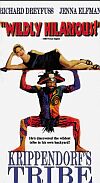
Krippendorf's
Tribe (link is still there, but the most
interesting parts have gone) On
the film, plus down the page, and worth looking for,
details of Mokae. I have used some of the information
from this on the site:
In a career that has
spanned four decades, Mokae has courageously portrayed
characters and presented theatrical productions
internationally that have examined apartheid, including
starring in the features A Dry White
Season and Sir Richard
Attenborough's Cry Freedom.
His American stage appearances include the Broadway
productions The Song of Jacob Zulu,
which brought him a 1993 Tony nomination for Best
Featured Actor in a Play, Master
Harold... and the Boys for which he
won the 1982 Tony Award, later recreating his work for
the PBS production, and A Lesson
From Aloes. His off-Broadway and
regional productions include starring roles in An
Attempt at Flying, The
Cherry Orchard, Fingernails
Blue as Flowers, Boesman
and Lena, The
Last Days of British Honduras and Trial
of Vessey.
|
 |
Sci·Fi Watcher's Guide by
Lee Mansfield (link has gone)
The Serpent and the RainbowThe most
impressive performance though goes to Zakes Mokae. He has
a truly awesome presence, one that convinces that he has
no qualms about torturing political prisoners on a
regular basis, and that he really could capture your soul
and use it for his own bidding.
One of
Craven's most experimental projects, a mainly successful
attempt to fuse political realism with surrealistic
horror. Certainly the best zombie movie in years for
traditionalists who prefer the subtler non-flesh eating
type. Harking back to the creepy atmosphere of early
zombie classics like White Zombie
and I Walked With A Zombie.
|
 |
Dust Devil (link has gone) Richard Stanley's direction is
intense and subtle, juggling the staples of a horror film
with an examination of a country and people who have been
scarred by racism, war and sexism. His female protagonist
in fleeing from an abusive relationship is seeking
liberation in the wasteland whereas the black policeman
(a wonderful performance from Zakes Mokae) is a character
already dead, destroyed by the destruction of his family
in a pointless war. In any shortlist of the best South
African films of the last decade Dust
Devil deserves a place at the top.
|
 |
Video Detective
Watch trailers from Zakes Mokae films.
|